Citrus & Nut Grove Well Pump Solutions: Managing Sand & Mineral Scale
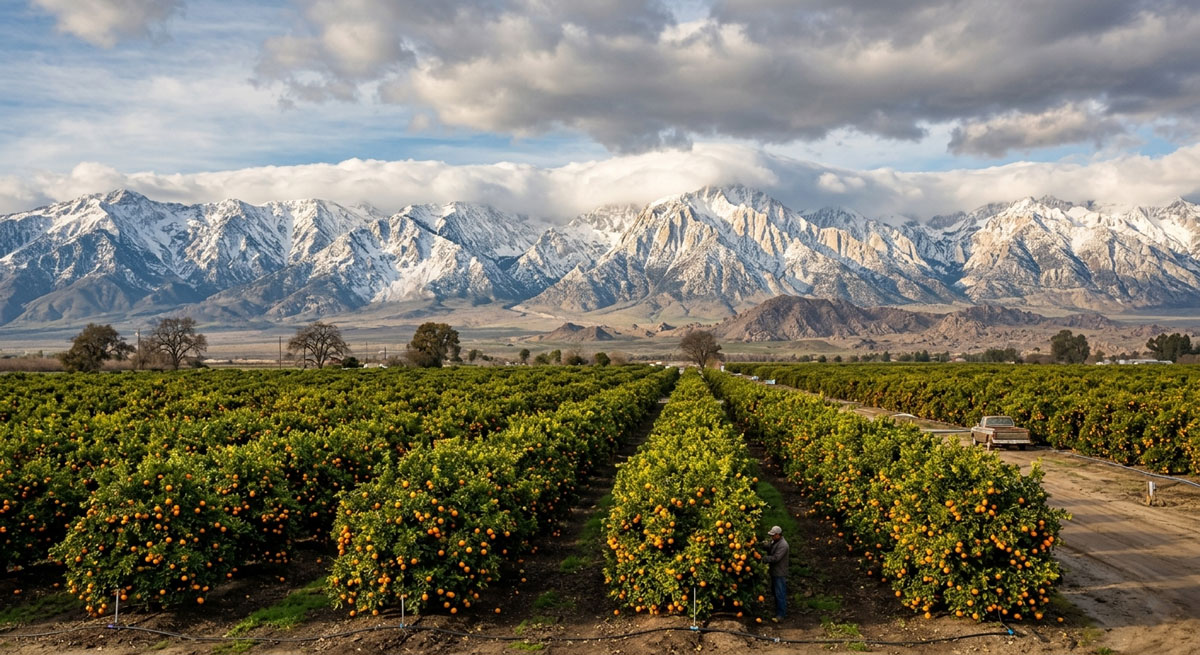
If you’re farming anywhere between Exeter, Porterville, and Hanford, you know that the San Joaquin Valley floor doesn’t give up its water easily. While we live in one of the most productive agricultural regions in the world, our local geology presents two major “pump killers”: fine sand intrusion and mineral-heavy hard water.
For an orange grove or an almond orchard, water isn’t just an input—it’s the entire heartbeat of the operation. When a pump fails during a July heatwave, you aren’t just losing a piece of equipment; you’re risking the health of trees that took years to establish.
The Geology: Why Central Valley Wells are “Gritty”
The San Joaquin Valley is essentially a giant “bathtub” filled with thousands of feet of unconsolidated sediment—sand, silt, and clay washed down from the Sierras over millions of years.
Unlike wells in other parts of the country that might sit in solid rock, our wells are often pulling from “sandy aquifers.” This means that as your pump draws water, it’s also trying to draw in fine silt. Over time, this silt acts like sandpaper, eating away at your pump’s impellers and bearings. For more details on sediment challenges, read our guide on Sand & Silt Damage in Central Valley Wells.
The “Silent Killers” of Citrus and Nut Groves
If you’re running orange groves near the foothills or pistachios out toward the valley floor, you face specific challenges:
- Emitter Clogging: Fine sand that bypasses your pump doesn’t just stay in the lines. It settles in your drip emitters. For citrus growers, this leads to “blind spots” in the grove where trees aren’t getting the nutrients or hydration they need.
- Scale Buildup: Our “hard” water is high in calcium and magnesium. If you use overhead cooling for your citrus, that white crust you see on the leaves is scale. It’s also building up inside your pump, choking off flow and making the motor run hotter.
Modern Solutions: The Power of VFDs
In the old days, pumps were either “on” or “off.” This sudden surge of suction would often “shock” the well, pulling in a massive slug of sand every time the motor kicked in.
Today, we use Variable Frequency Drives (VFDs). Think of a VFD like a dimmer switch for your pump. Instead of a violent 100% start, the VFD slowly ramps the motor up.
Why Farmers Love VFDs
- Constant Water Pressure: Perfect for precision irrigation systems.
- Reduced Energy Bills: Power is matched to actual flow needs rather than running at full blast.
Why Your Well Loves VFDs
- Low Suction Velocity: It significantly reduces the amount of sand pulled into the system by keeping the suction slow and steady.
- Soft Starts: Minimizes mechanical strain on pump shafts and impellers.
DIY Tips: What You Can Do Before Calling the Pros
While pulling a 400-foot agricultural pump is a job for our big rigs, there are a few “boots-on-the-ground” things you can do to stay ahead of a mess:
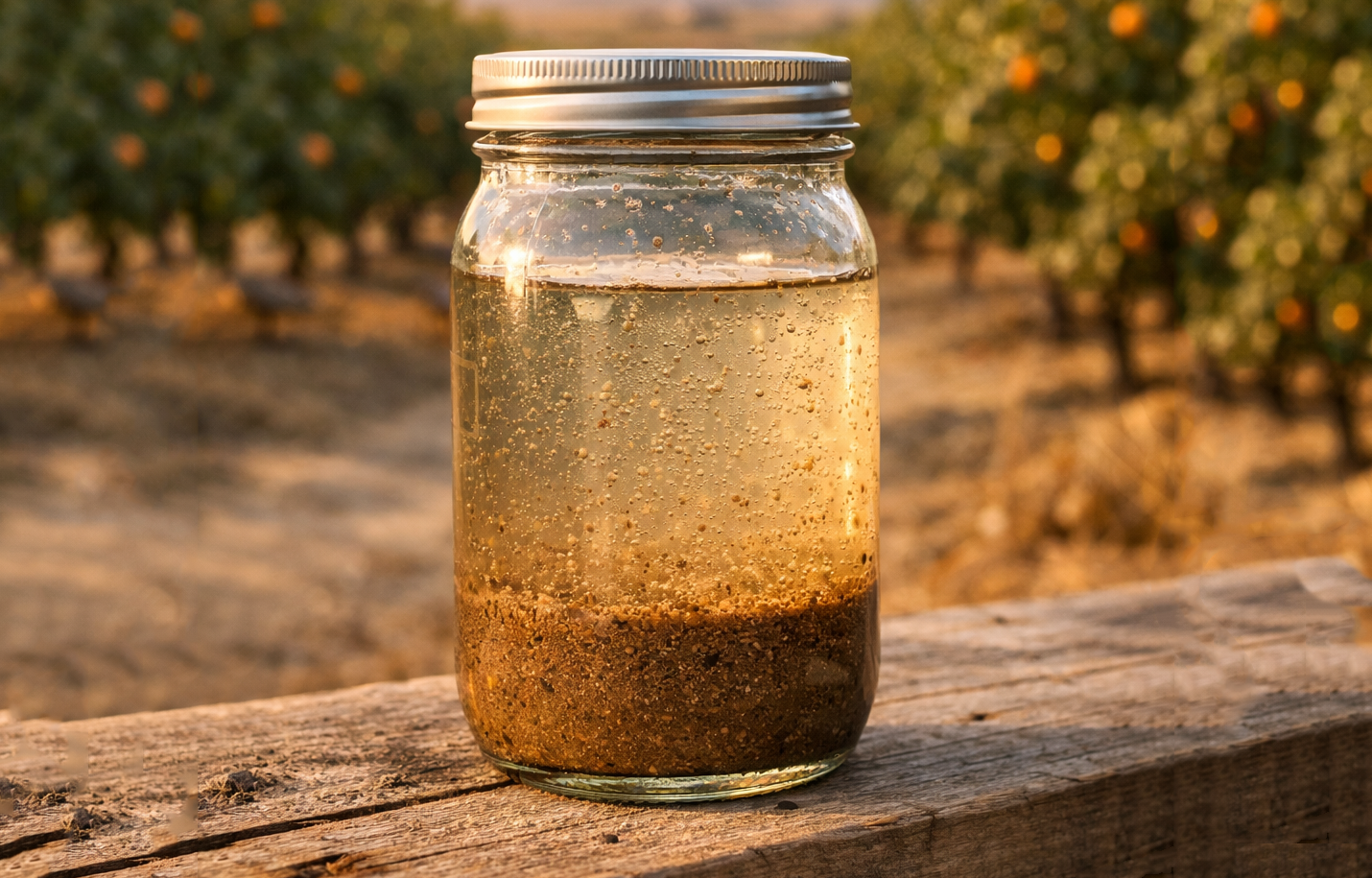
- The “Bucket Test”: Once a month, catch a 5-gallon bucket of water directly from the well-head (before the filter). Let it sit for 10 minutes. If you see more than a “pinch” of sand at the bottom, your well might be “making sand,” and it’s time to check your screen or slow down your pull rate.
- Check Your AMPs: If you have a control box, keep an eye on the AMP draw. If it’s creeping up, your motor is working harder—likely due to scale buildup or a bearing that’s starting to seize from sand.
- Keep Your NEMA Boxes Clear: It sounds simple, but Central Valley heat and dust are brutal on electronics. Ensure your electrical enclosures are clear of spider webs and dirt to prevent overheating.
Planning for the Future of Valley Agriculture
Whether you’re in Tulare County or Kings County, the key to a reliable agricultural well is matching the equipment to the local geology. We’ve spent four generations learning the specific “sand-bands” and shifting water tables of this valley.
If you’re noticing lower pressure or “chattering” in your lines, don’t wait for the pump to seize in the middle of a heatwave. Let’s look at your filtration, sand separation, and motor controls now, so your water stays flowing when the valley heat is at its worst.
Need an assessment of your agricultural well?
From VFD installations to custom fabrication and pump repairs, Ingram Pump and Equipment has been serving the valley’s farmers since 1947.
- Explore Our Agricultural Services
- Request an Irrigation Quote
- Call us directly at (559) 734-3362
Frequently Asked Questions
How does fine sand damage agricultural well pumps?
Central Valley alluvial soils produce fine sand that acts like abrasive sandpaper. As the pump runs, sand particles erode the pump's impellers, diffusers, and bearings, gradually reducing output pressure and causing premature motor failure.
What is a VFD, and how does it protect an irrigation well?
A Variable Frequency Drive (VFD) acts like a dimmer switch for your well pump. Instead of turning on at 100% capacity and violently drawing sand from the aquifer, a VFD slowly ramps the motor up, maintaining steady water pressure and significantly reducing sand draw.
How do I clear calcium scale from citrus orchard emitters?
Calcium and magnesium scale from hard groundwater can clog drip lines. Beyond routine acid flushes of drip systems, upgrading your well filtration or using inline sand separators and water conditioners helps prevent mineral scale from reaching orchard emitters.
Related Articles
Well and Pump Sizing for Central Valley Citrus Orchards
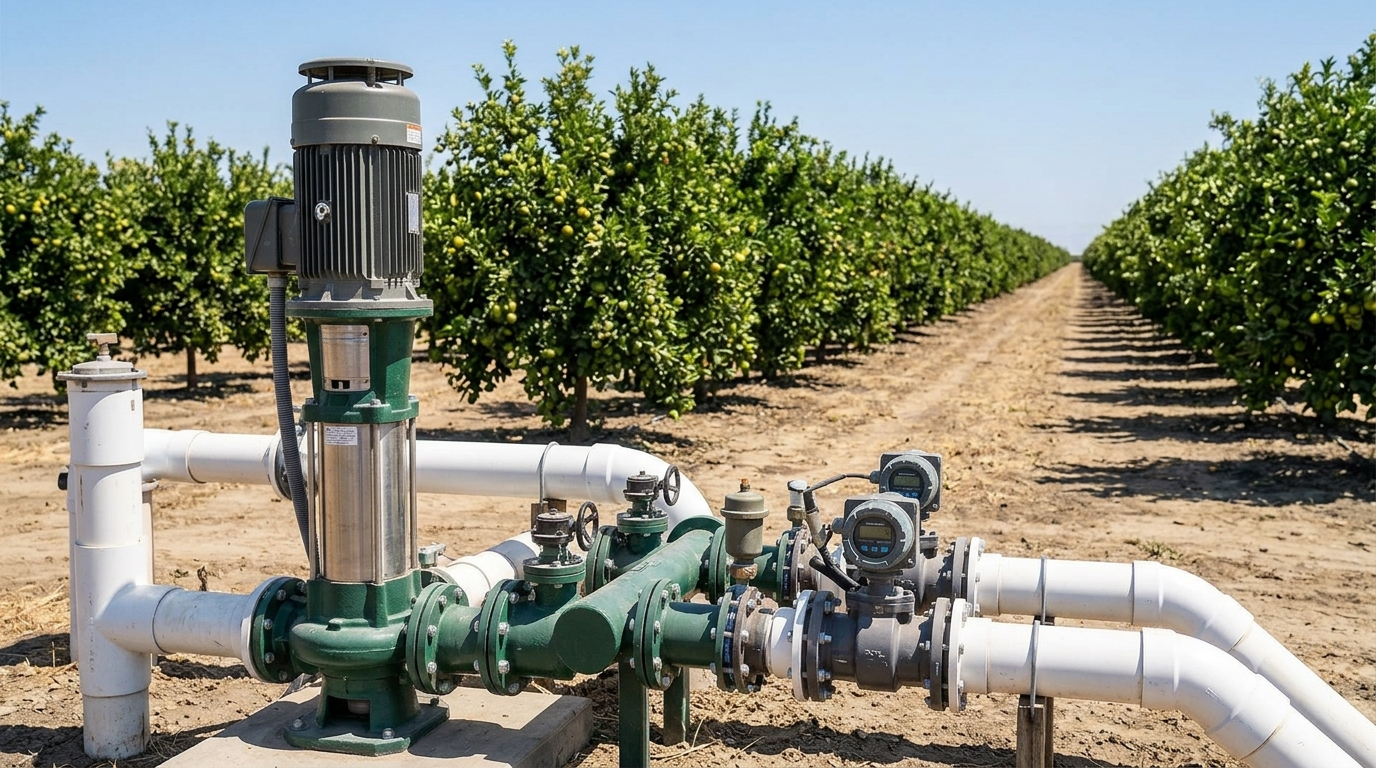
A technical guide for Central Valley citrus growers on calculating orchard water demand, sizing deep-well submersible pumps, and matching horsepower to water tables.
How Central Valley Soil and Sandy Aquifers Affect Your Well Water
Understand the geology of the San Joaquin Valley and how sandy alluvial aquifers affect your well water, pump wear, and drip irrigation systems.
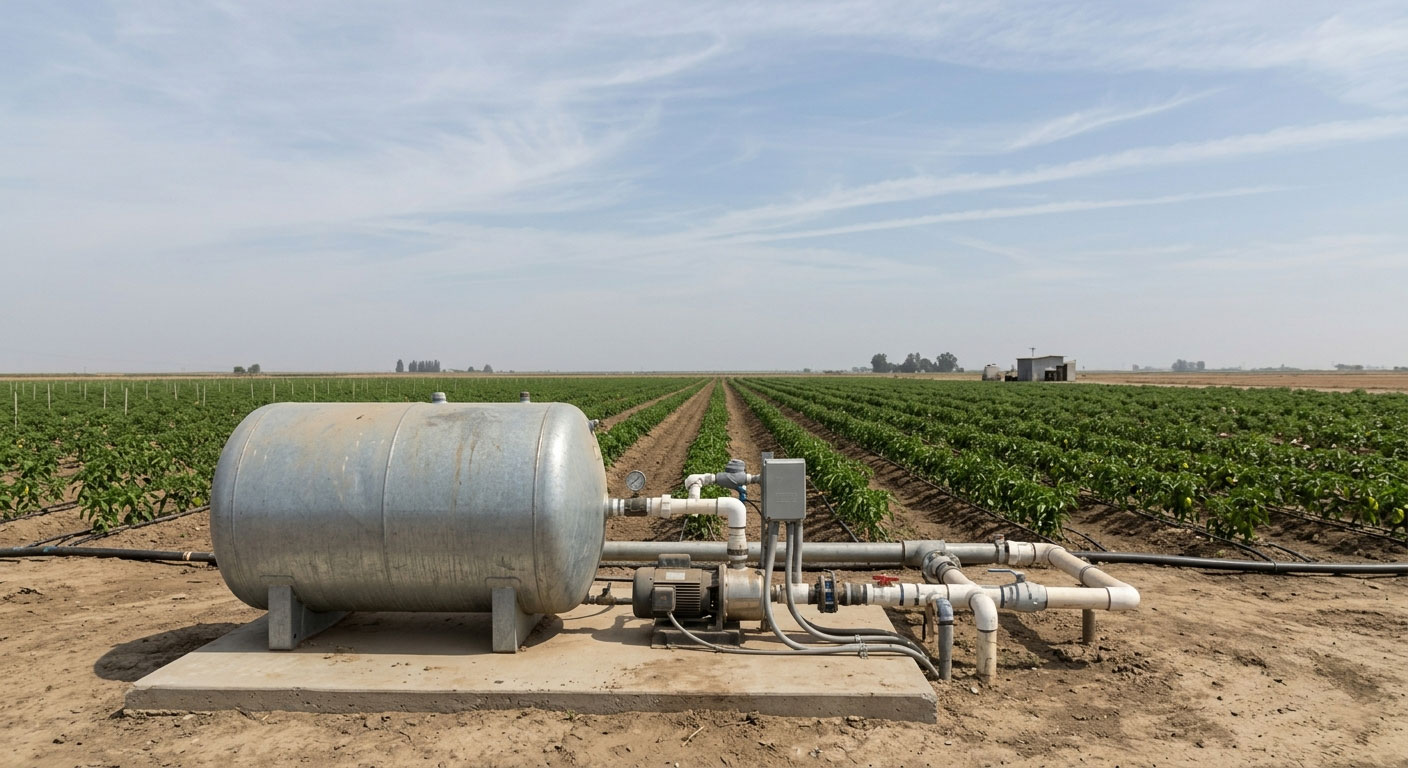
Well Pressure Tank Sizing for Small Farms: Why Most Tanks Are Too Small
Running a small farm in Kings or Tulare County? Discover why undersized pressure tanks cause premature well pump failures, and learn how to size your water system correctly.