Well Pressure Tank Sizing for Small Farms: Why Most Tanks Are Too Small
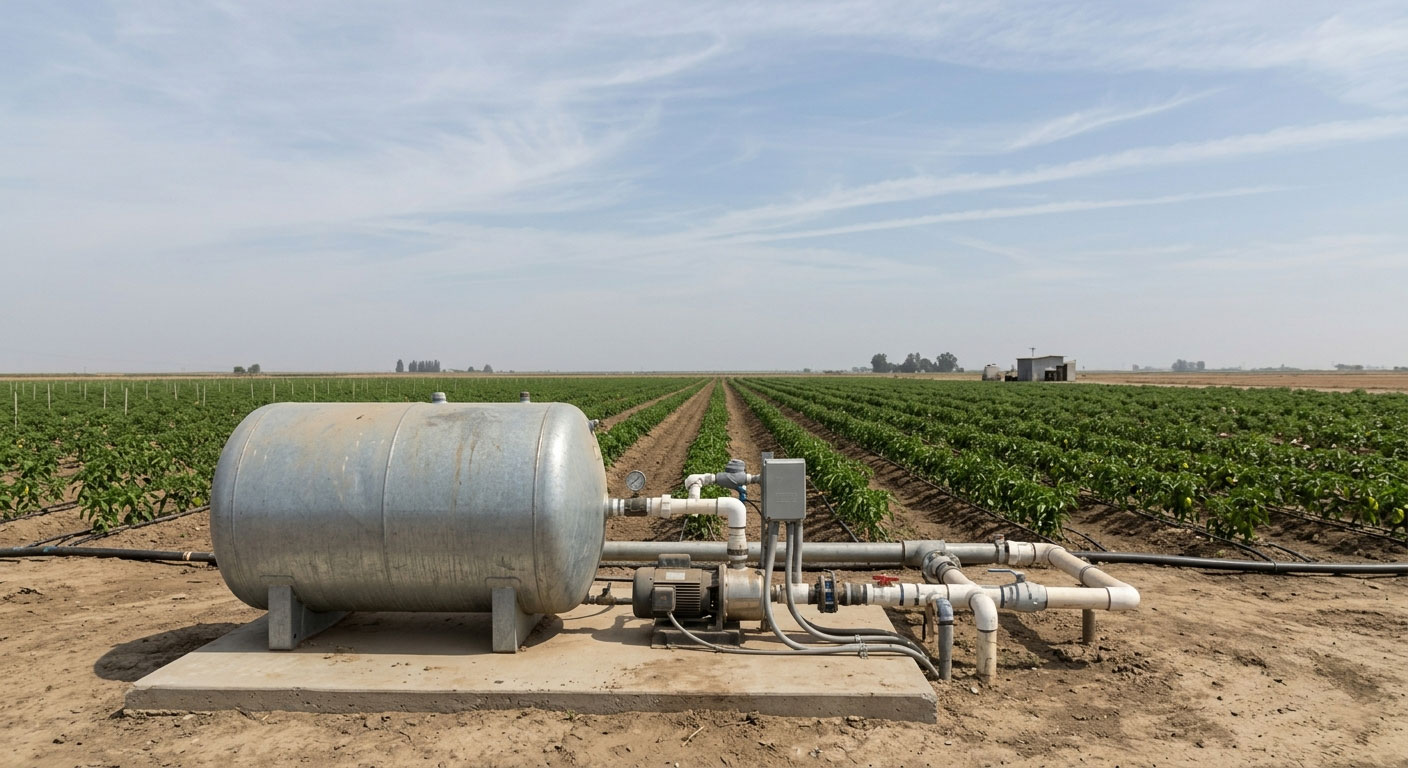
We spend a lot of time out in the flat-farm geography of western Tulare County and Kings County, from Hanford out toward Lemoore and Corcoran. We see a common theme in the irrigation setups on these small farms: everyone is dealing with constant, costly pump failures. When we get out there, the culprit is almost always the same: an undersized pressure tank.
The homeowner asks us: “Why does my pressure tank keep failing, or why does my pump run constantly during irrigation?” The answer is that their pressure tank was sized for a home, not an agricultural operation.
Why Residential Specs Don’t Work on Farms
The mistake happens when someone treats a small farm like a normal house. A standard residential pressure tank is designed for a home—a shower, a washing machine, and a kitchen sink. But on a small farm, you aren’t just running a kitchen sink. You might have drip lines running for your backyard citrus trees, a livestock waterer filling up, and a wash-down hose in the barn—all at the same time.
If your tank is sized for a house, it cannot handle the volume of water needed for these multiple draw points.
- Constant Start-Ups: Every time a drip line turns on, the pressure in a small tank drops instantly, forcing the pump to turn on.
- Constant Running: When multiple valves are open, a small tank cannot buffer the flow, forcing the pump to run at high heat and high load continuously.
For a deeper dive into managing agricultural setups, read our guide on Citrus & Nut Grove Well Pump Solutions.
The Real Cost of Undersizing
The real cost of an undersized tank isn’t just the price of the tank itself—it’s the cost of burning out a submersible pump motor that should have lasted another decade.
Constant, rapid starting and stopping (known as “short cycling”) burns up motor windings. Running a residential pump at continuous high-load for farm-scale irrigation will cause the pump bearings to fail rapidly. We see it all the time: a $500 tank upgrade could have saved a $4,000 deep-well pump repair. Learn to spot this issue early in our Plain-English Short-Cycling Guide.
Calculating the Right Size
To get the right size, you need to calculate the “drawdown” requirement based on your maximum potential usage scenario.
- Map All Outlets: Identify all simultaneous water-use points (drip zones, animal waterers, household taps).
- Determine Combined GPM: Calculate the total gallons per minute (GPM) demand when all these systems are active.
- Ensure a Minimum 2-Minute Run Time: The pressure tank should hold enough water so that your pump runs for a healthy, continuous period of at least two minutes once triggered, allowing the motor to shed the heat generated during startup.
Get Your Small Farm Sized Right the First Time
Ingram Pump and Equipment serves family farms and acreages across Kings and Tulare County—from Hanford to Pixley. We understand the high-flow demands of Central Valley farming.
- Explore Our Agricultural Pump Solutions
- Request an System Capacity Audit
- Call us at (559) 734-3362 to size your system correctly
Frequently Asked Questions
Why is my pressure tank failing frequently?
Pressure tanks on small farms in Hanford or Lemoore often fail because they were sized for residential, not agricultural, demands. When you have multiple simultaneous draw points like drip lines and livestock, an undersized tank constantly cycles, leading to premature bladder failure.
How do I calculate the right tank size for a small farm?
You must calculate your maximum potential simultaneous water usage based on all equipment running together. We then size the tank to provide enough drawdown cushion so the pump runs for a healthy, sustained period, rather than turning on for just a few seconds at a time.
What are the risks of an undersized pressure tank?
The risks are significant and expensive: it forces your pump to cycle rapidly, which burns out motor windings, and causes excessive wear on mechanical parts. In the long run, investing in the right size tank now saves thousands in premature pump replacements.
Related Articles
How Central Valley Soil and Sandy Aquifers Affect Your Well Water
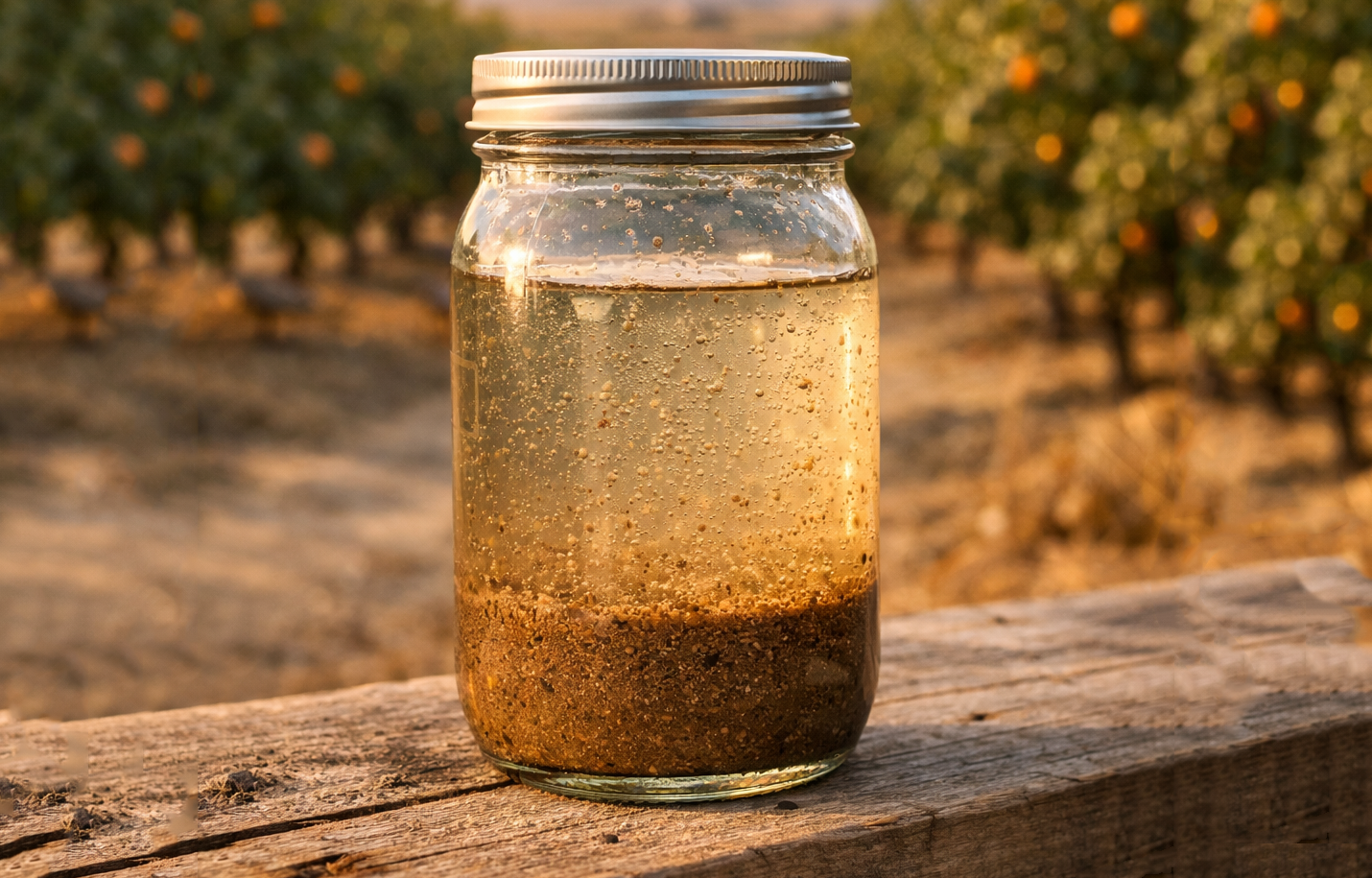
Understand the geology of the San Joaquin Valley and how sandy alluvial aquifers affect your well water, pump wear, and drip irrigation systems.
Citrus & Nut Grove Well Pump Solutions: Managing Sand & Mineral Scale
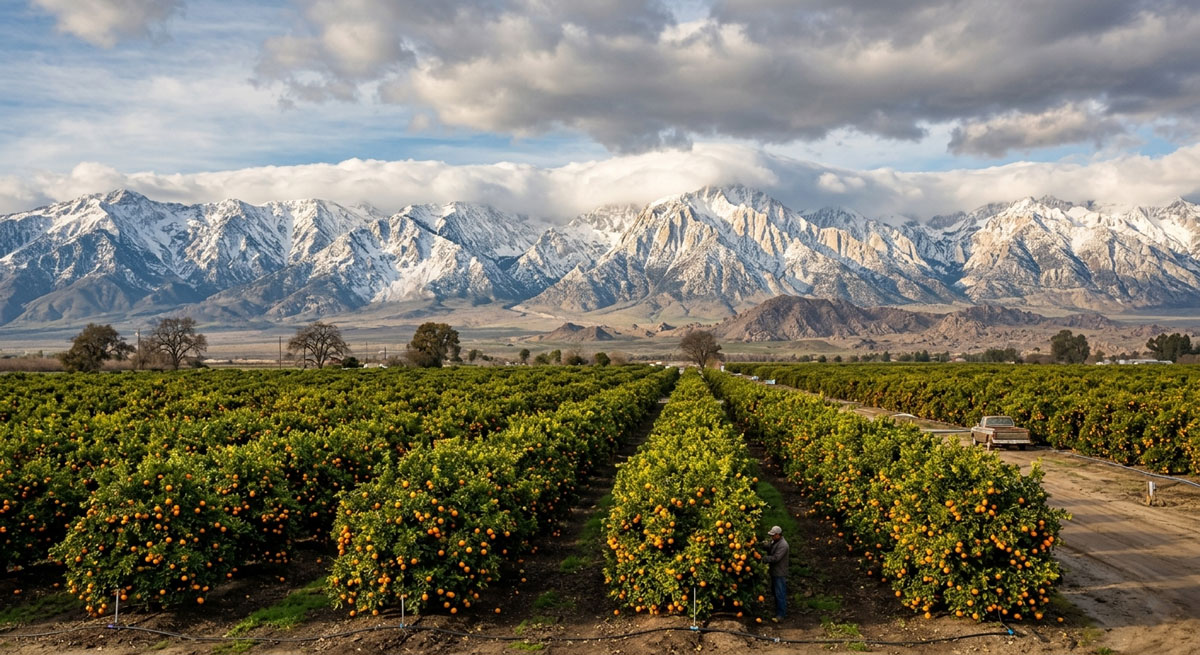
A comprehensive guide for Central Valley farmers in Tulare & Kings County on managing sandy aquifers, calcium scale, and leveraging VFDs to protect citrus and nut grove irrigation systems.
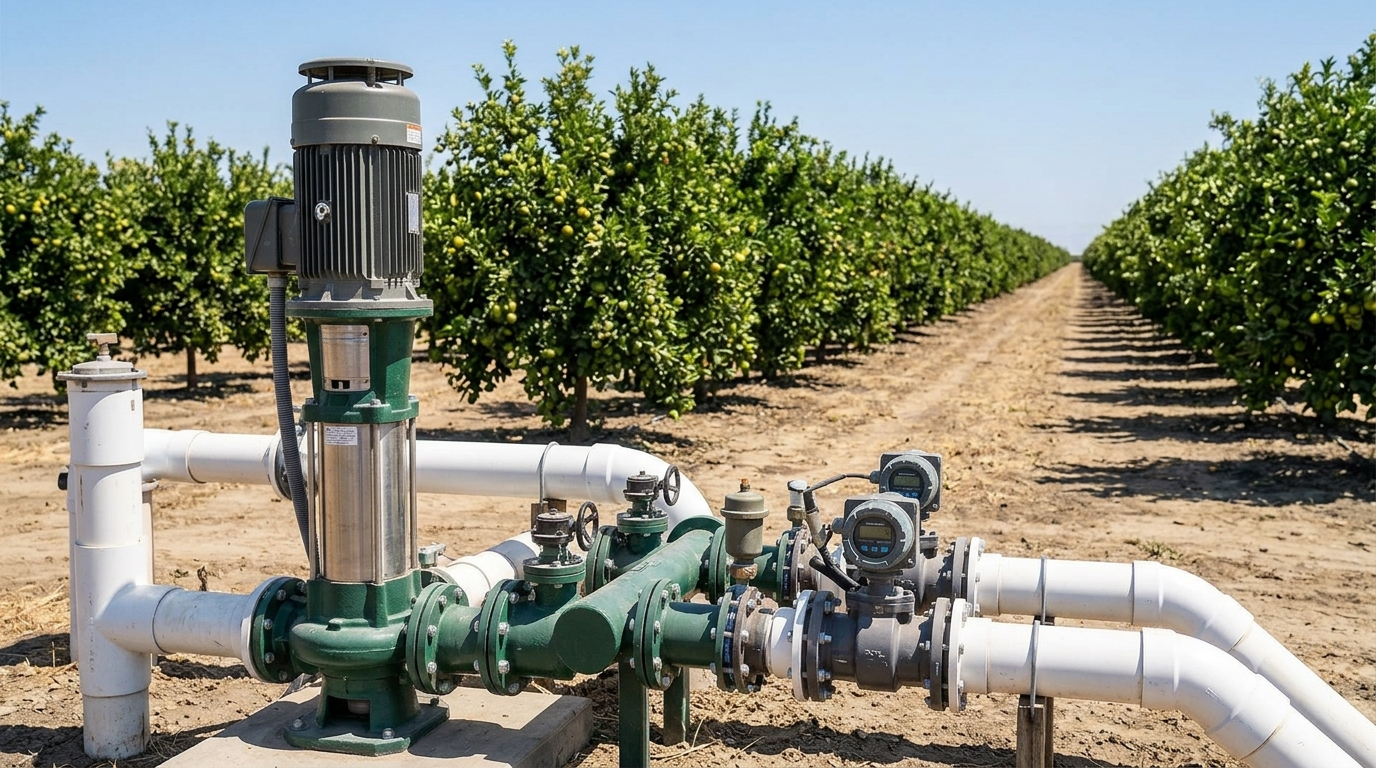
Well and Pump Sizing for Central Valley Citrus Orchards
A technical guide for Central Valley citrus growers on calculating orchard water demand, sizing deep-well submersible pumps, and matching horsepower to water tables.