Why Is My Well Pump Short Cycling? (And How to Prevent Motor Burnout)
There is nothing quite as annoying—and frankly, as worrying—as hearing a constant, rapid click-clack-click sound coming from your well house. If your pump is clicking on and off every 30 seconds while you run a single faucet, you are experiencing what we call short cycling.
Homeowners across Visalia, Exeter, and Three Rivers ask us this all the time: “My pump kicks on every 30 seconds. Is that bad?” The short answer is yes, it’s a critical emergency for your system. If you do not fix it immediately, you will destroy your submersible pump motor.
What is Well Pump Short Cycling?
Under normal conditions, your water well system relies on your pressure tank as a protective storage buffer.
- Drawing from Storage: When you open a faucet, pressurized water is drawn from the tank first. The pump does not turn on.
- Reaching Cut-In Pressure: Only when the tank’s water volume drops and the pressure hits a set low point (typically 30 or 40 PSI) does the pressure switch signal the pump to start.
- Filling the Tank: The pump runs for a healthy 1 to 2 minutes, refilling the tank and restoring the air cushion.
- Reaching Cut-Out Pressure: Once the high-pressure limit is hit (50 or 60 PSI), the pump shuts off.
Short cycling happens when your pressure tank loses its “air cushion” (becoming waterlogged). Because water cannot compress, the pressure in the tank drops to zero the second you open a tap, triggering the pump. Once the pump starts, the pressure instantly spikes to the cut-out limit, shutting the pump off. This loop repeats endlessly.
Three Things to Check Before Calling the Pros
Before you call an emergency technician, perform these three simple DIY diagnostic checks to locate the issue:
- The Tank Tap Test: Go to your well house and tap the pressure tank with your knuckles or a plastic screwdriver. A properly functioning tank should sound hollow at the top (where air is stored) and solid at the bottom (where water sits). If it sounds solid all the way to the top, your tank is completely waterlogged.
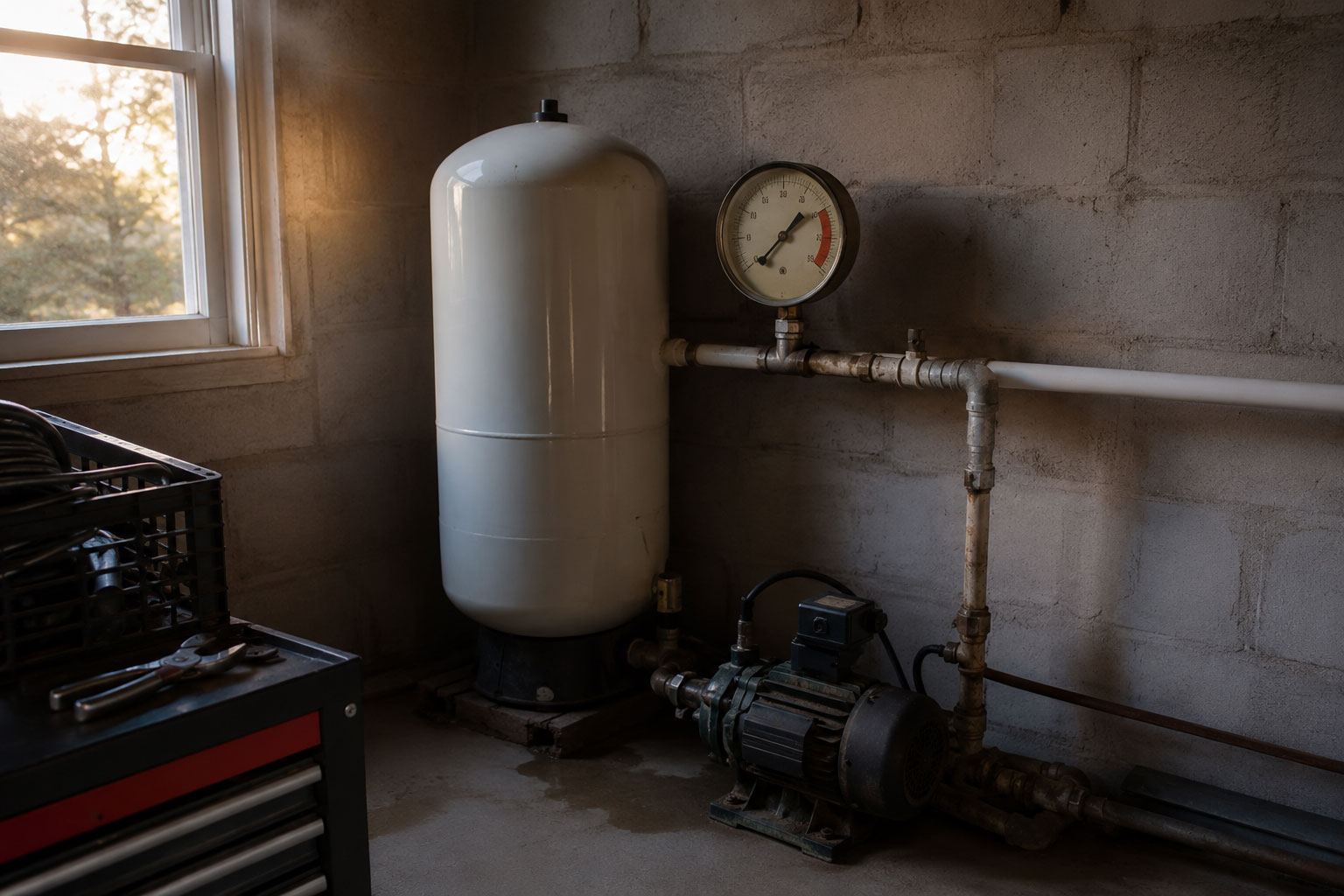
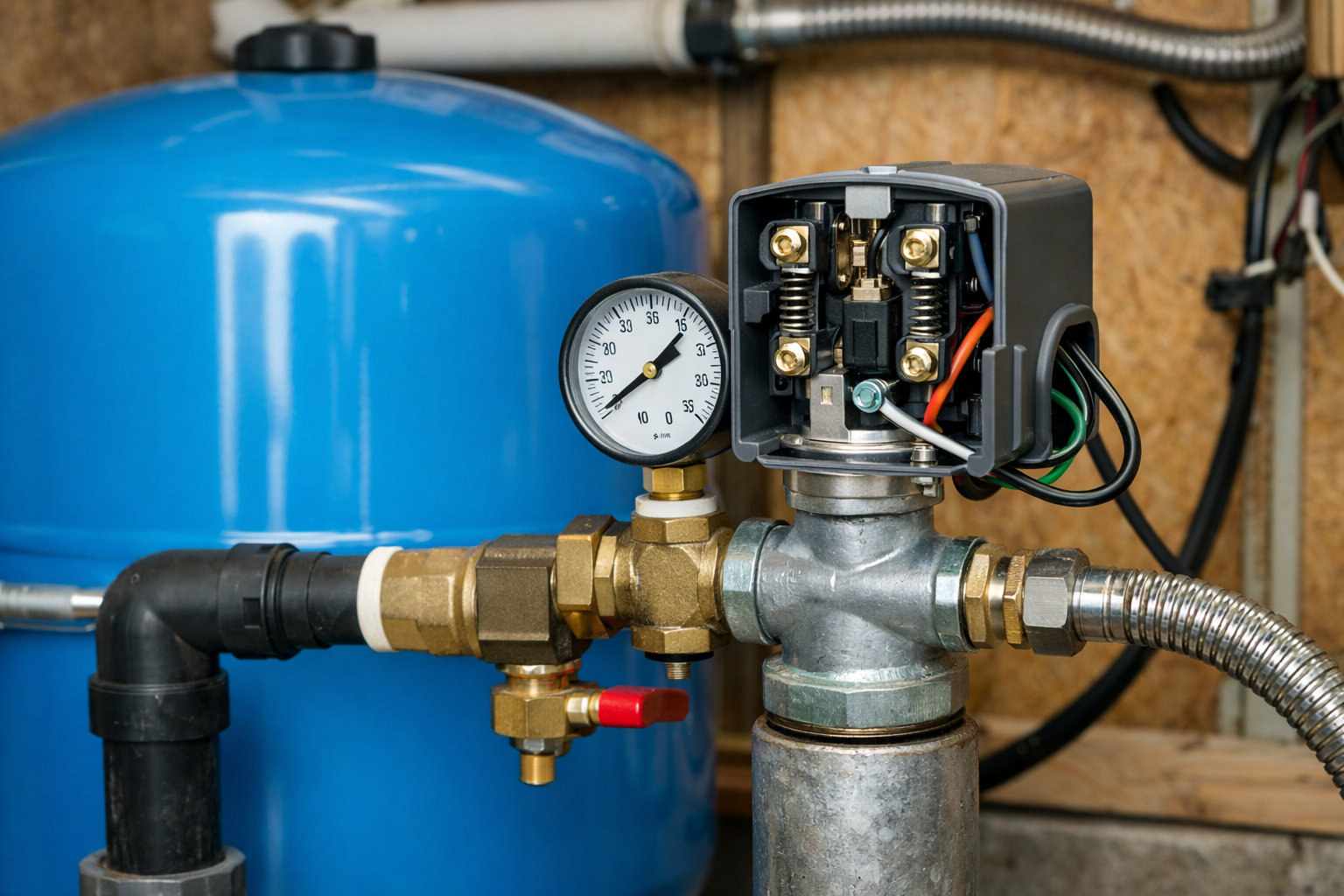
- Watch the Pressure Gauge: Turn on a garden hose or bathtub faucet and watch the dial on your pressure gauge. If the needle jumps up and down wildly every few seconds, your pressure switch or tank is failing to buffer the pressure.
- Inspect the Well Pump Breaker: If your pump is short cycling, check your electrical panel. If the breaker is hot or keeps tripping, the frequent motor startups are drawing excessive current and stressing your electrical system. Learn more about power issues in our No-Water Troubleshooting Checklist.
Ruptured Bladder vs. Lost Air Charge
- Lost Air Charge: Over time, pressure tanks naturally lose small amounts of air. If the tank is structurally sound, a technician can drain the system and pump air back into the tank’s valve to restore the cushion.
- Ruptured Bladder: If you depress the air valve (the tire-style valve on top of the tank) and water squirts out, the internal rubber bladder has ruptured. Water has entered the air chamber, rendering the tank useless. The only solution is to replace the pressure tank. To understand how to choose the right tank size, read our guide on Small Farm Pressure Tank Sizing.
Protect Your Submersible Pump Motor
If your well pump is short cycling, don’t ignore it. Replacing a pressure tank is simple and affordable—replacing a burned-out submersible motor 300 feet underground is a major expense.
At Ingram Pump & Equipment, we serve Visalia, Exeter, Porterville, and all of Tulare County with prompt, honest repairs.
- Learn About Our Well Pump Repair Services
- Request an Emergency Repair Quote
- Call the Ingram Team at (559) 734-3362 for expert diagnostic help
Frequently Asked Questions
What is well pump short cycling?
Short cycling occurs when a well pump turns on and off rapidly (e.g., every few seconds or minutes). This is typically caused by a waterlogged pressure tank that has lost its critical air cushion, leaving no buffer to store water pressure.
Is short cycling an emergency for my well system?
Yes. Every time a well pump starts, it draws a massive electrical current surge that generates intense heat in the motor windings. Continuous short cycling will rapidly burn out the motor, leading to an expensive and sudden replacement.
Can I fix a short-cycling well pump myself?
If the cause is a lost air charge in the pressure tank, you can drain the system and recharge the tank with air. However, if the tank's internal rubber bladder has ruptured, the entire pressure tank must be replaced by a professional.
Related Articles
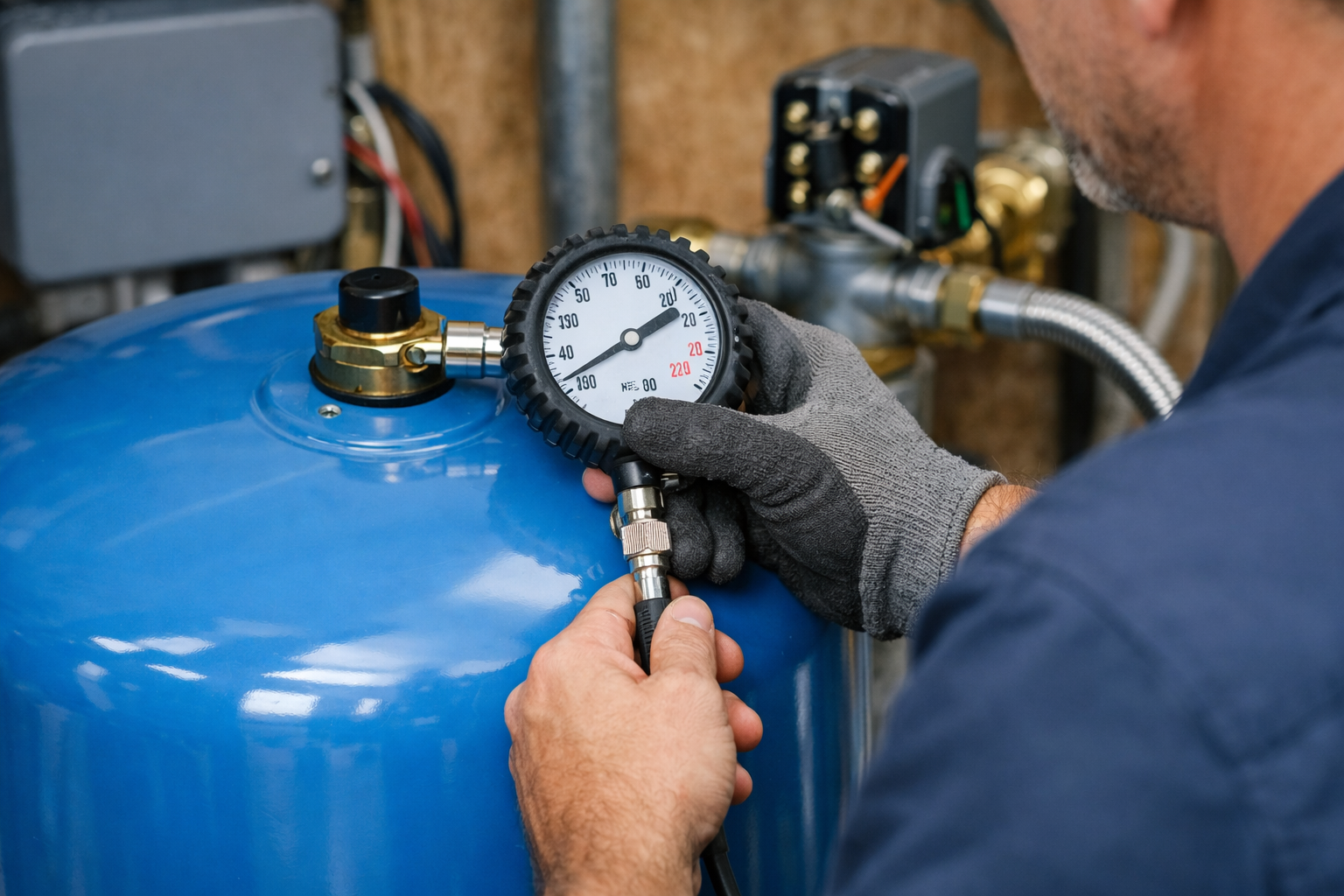
DIY Well Pressure Tank Care: Checking Air Charge and Precharge Pressure
A step-by-step DIY guide on checking, testing, and recharging your water well pressure tank air precharge pressure to extend your pump lifespan.
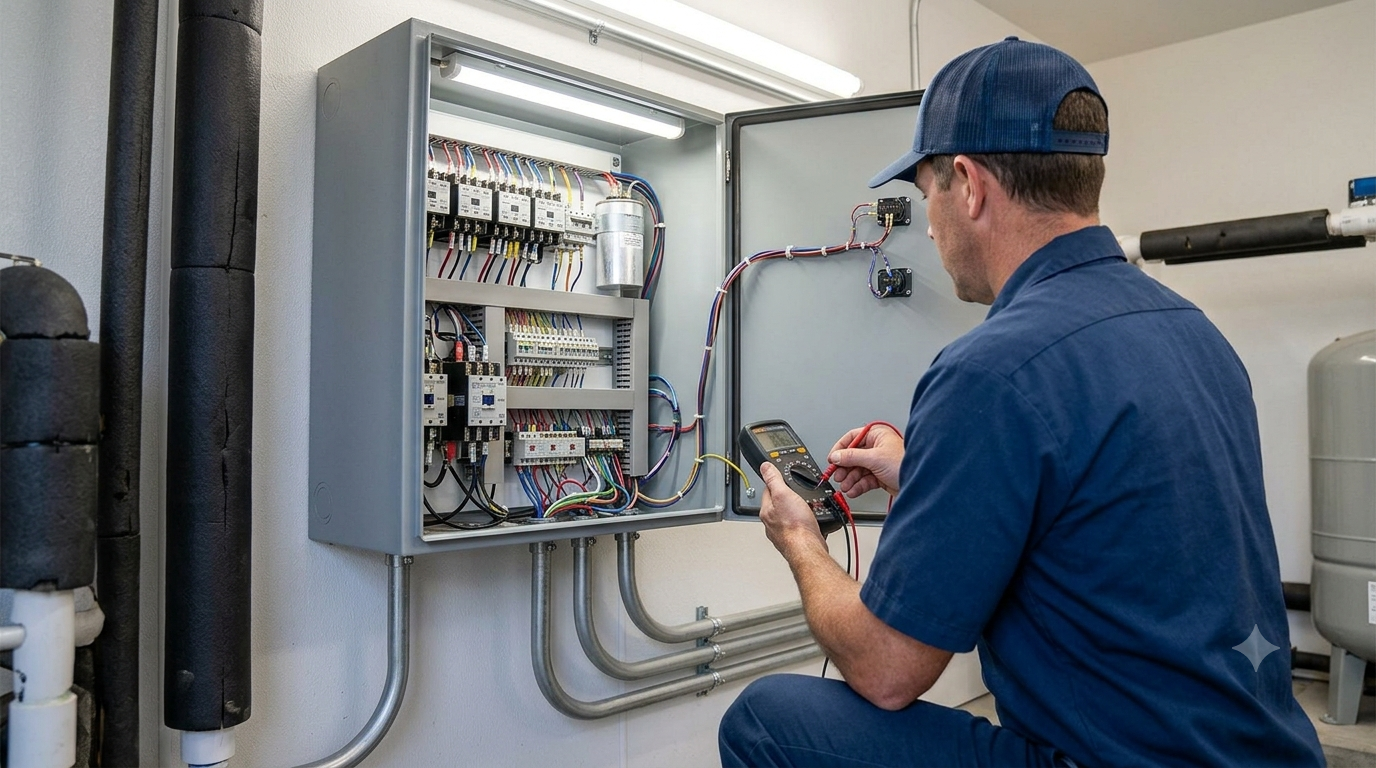
Inspecting Your Well’s Electrical System: Breakers, Wiring, and Control Boxes
A homeowner’s guide to well pump electrical systems. Learn how to inspect breakers, wiring, control boxes, and pressure switches safely to prevent system failure.
DIY Guide: Inspecting and Replacing Your Well’s Pressure Switch and Gauge
Learn how to safely inspect, clean, and replace your water well pressure switch and gauge. Follow our step-by-step DIY guide for Central Valley homeowners.