Well and Pump Sizing for Central Valley Citrus Orchards
In the San Joaquin Valley—specifically across the citrus belts of Exeter, Lindsay, Woodlake, and Porterville—water is the lifeblood of farming. A healthy citrus grove requires precision watering. If your well pump fails or cannot deliver the necessary flow during the peak summer heat, you risk losing fruit sizing, leaf canopy, and the long-term yield of trees that took years to establish.
Sizing an agricultural well and pump is a technical engineering challenge that must match your orchard’s specific acreage with local groundwater table dynamics. This guide covers the critical factors in sizing a citrus irrigation system.
1. Calculating Orchard Water Demand
Citrus trees have varying water needs depending on tree age, soil type, and the season.
- Peak Demand Sizing: We always size agricultural wells based on peak summer evapotranspiration (ET) rates. During July, a mature orange or lemon tree can consume up to 60 gallons of water per day.
- Flow Rate (GPM) Calculation: To water 40 acres of mature citrus using a standard drip system with a 12-hour irrigation window, your well must deliver a continuous flow of at least 150 to 200 Gallons Per Minute (GPM) to supply the system.
2. Understanding Groundwater Table Dynamics
You cannot size a pump motor simply based on the depth of the well shaft. You must evaluate the active water levels in your aquifer:
- Static Water Level: The resting depth of groundwater when the well has been inactive for several hours.
- Drawdown (Dynamic) Water Level: When an agricultural pump turns on and draws 200 GPM, the water level inside the casing drops, forming a “cone of depression.” The dynamic water level is the depth at which the water stabilizes while the pump is active.
- Total Dynamic Head (TDH): This is the total equivalent height your pump must lift the water. It includes the dynamic lift depth, friction losses inside the pipe column, and the operating pressure of your orchard’s filtration and drip systems (typically 30 to 45 PSI at the field inlet).
| Acreage | Irrigation Method | Target GPM Flow | Average Required Pump HP |
|---|---|---|---|
| 5 to 10 Acres | Drip / Micro-sprinkler | 40 to 60 GPM | 7.5 to 10 HP |
| 20 Acres | Drip / Micro-sprinkler | 80 to 120 GPM | 15 to 25 HP |
| 40 Acres | Drip / Micro-sprinkler | 150 to 220 GPM | 30 to 50 HP |
| 80+ Acres | High-Volume Micro-sprinkler | 300 to 500+ GPM | 75 to 120+ HP |
3. Horsepower Sizing & Pump Stages
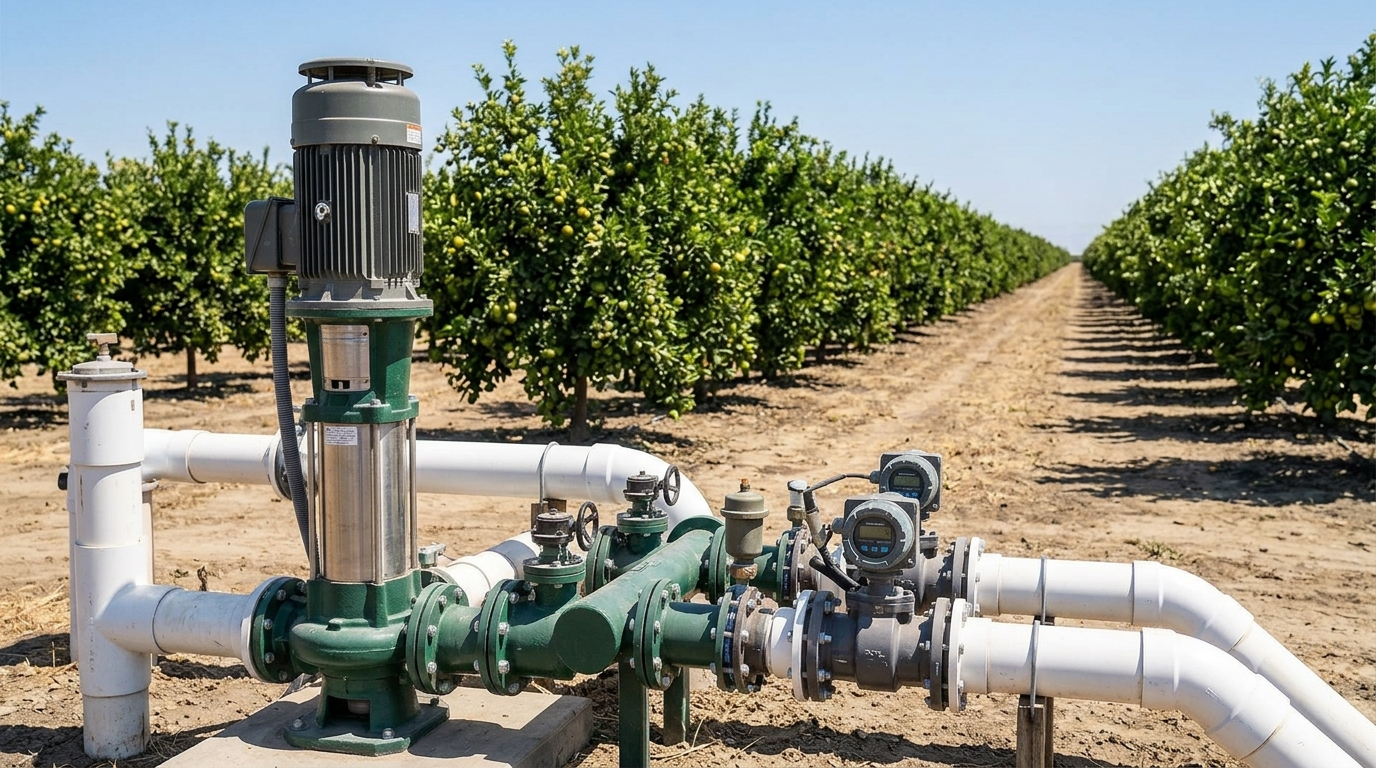
Submersible agricultural pumps use multiple “stages” (stacked bowls containing impellers) to lift high volumes of water from deep underground.
- Matching Motor to Depth: A 10 HP motor can deliver 150 GPM if the water table is shallow (e.g., 80 feet dynamic lift). However, if your dynamic water level drops to 250 feet, that same GPM flow will require a 30 to 40 HP motor to overcome the weight of the water column.
- Avoiding “Over-Sizing”: Installing a pump motor that is too powerful for your well’s “recovery rate” is highly dangerous. The pump will quickly lower the water level below the intake, causing the pump to run dry, draw air, vibrate violently, and pull massive slugs of abrasive sand. Read about sand impacts in How Central Valley Soil Affects Well Water.
4. The Power of Variable Frequency Drives (VFDs)
Citrus groves are typically irrigated in “blocks” to manage water pressure.
- The Problem: If block 1 requires 100 GPM, but block 2 requires only 50 GPM, a standard single-speed pump must run at 100% capacity for both, wasting massive amounts of energy and straining valves.
- The Solution: A VFD matches the pump motor’s speed to the exact flow and pressure demand of the active block. It slowly ramps the motor up, eliminating startup strain, lowering energy bills by up to 40%, and protecting your well from drawing abrasive alluvial sand. Learn more in our Citrus & Nut Grove Well Solutions.
Engineering Your Agricultural Water Systems
At Ingram Pump & Equipment, we have over 75 years of experience engineering high-capacity agricultural water wells across Tulare and Kings Counties. We perform detailed pump drawdown tests, analyze static and dynamic water levels, and design high-efficiency VFD pumping systems custom-sized for your crop’s exact needs.
- Check Our Agricultural Well Services
- Schedule an Orchard Well and Pump Capacity Audit
- Call our Exeter-area specialists today at (559) 734-3362
Frequently Asked Questions
How much water does a mature citrus tree require in the summer?
A mature Central Valley citrus tree can require up to 50 to 60 gallons of water per day during peak July heat to maintain tree health and support fruit sizing.
What is the difference between static and dynamic water levels?
Static water level is the depth of water in the well when the pump is turned off. Dynamic (drawdown) water level is the lower depth to which the water falls while the pump is active and drawing water.
Why is correct pump sizing critical for citrus growers?
An undersized pump won't deliver enough flow (GPM) to maintain system pressure across all drip blocks, leading to dry spots and tree stress. An oversized pump will suck air, pull sand, and consume excessive energy.
Related Articles
Citrus & Nut Grove Well Pump Solutions: Managing Sand & Mineral Scale
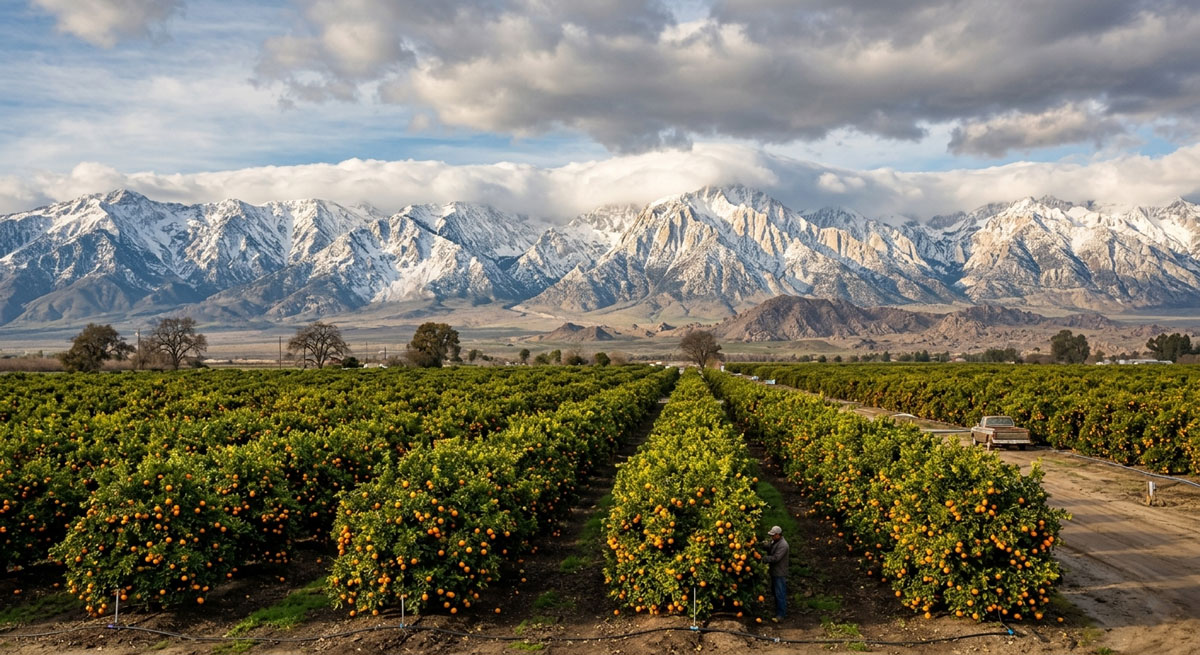
A comprehensive guide for Central Valley farmers in Tulare & Kings County on managing sandy aquifers, calcium scale, and leveraging VFDs to protect citrus and nut grove irrigation systems.
How Central Valley Soil and Sandy Aquifers Affect Your Well Water
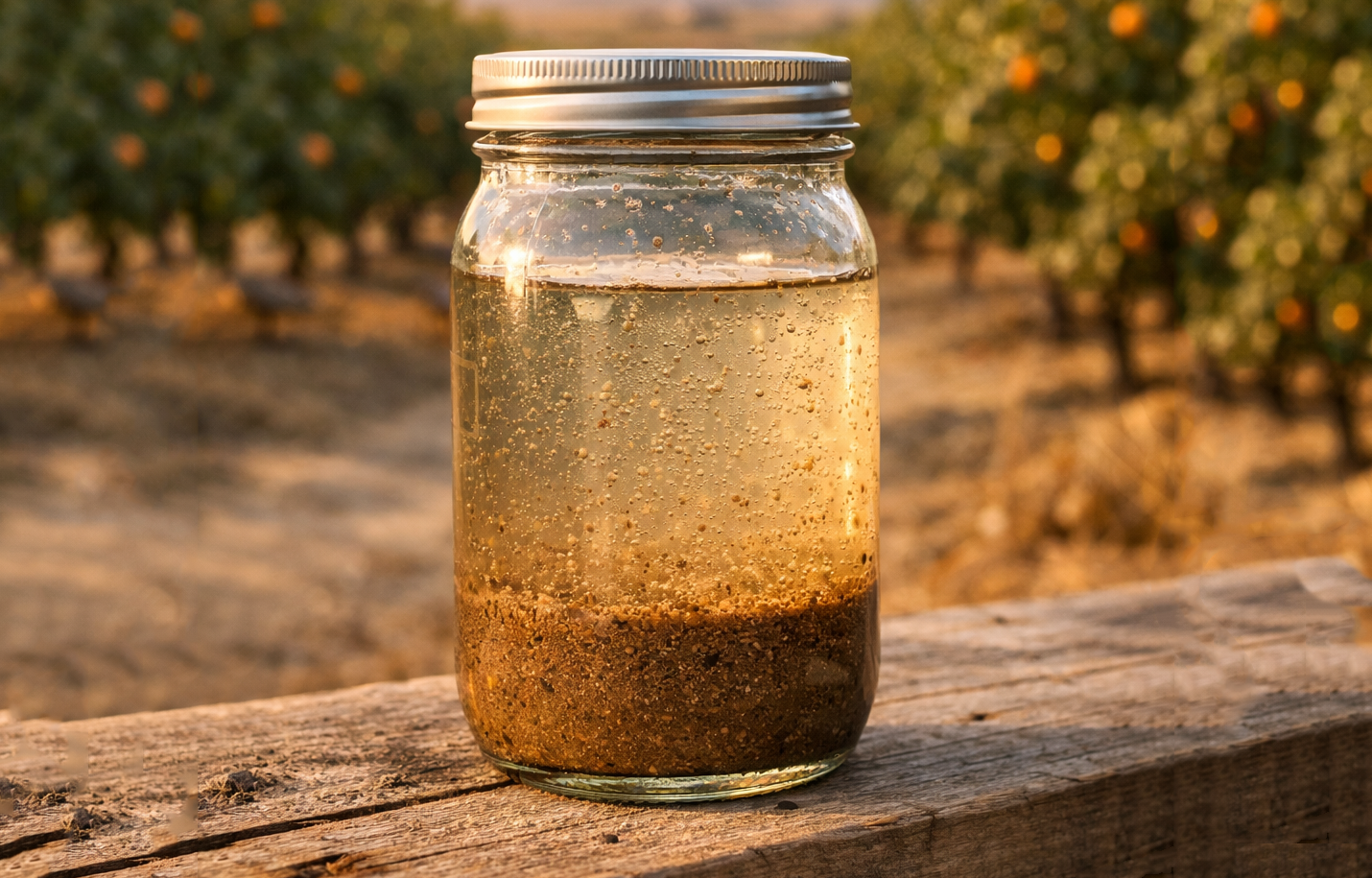
Understand the geology of the San Joaquin Valley and how sandy alluvial aquifers affect your well water, pump wear, and drip irrigation systems.
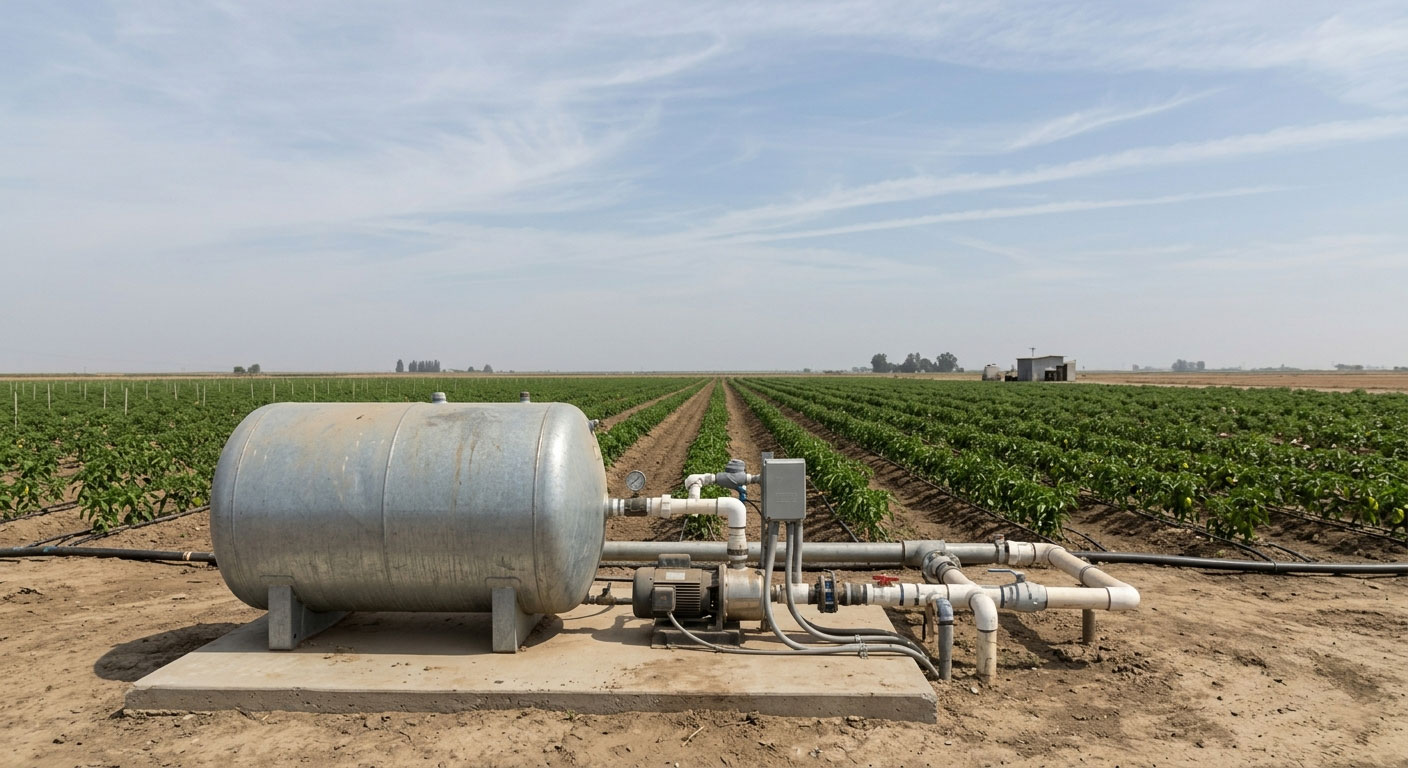
Well Pressure Tank Sizing for Small Farms: Why Most Tanks Are Too Small
Running a small farm in Kings or Tulare County? Discover why undersized pressure tanks cause premature well pump failures, and learn how to size your water system correctly.