How Central Valley Soil and Sandy Aquifers Affect Your Well Water
If you farm or live on acreage anywhere between Visalia, Hanford, and Porterville, you know that the San Joaquin Valley floor doesn’t give up its water easily. While we live in one of the most productive agricultural regions in the world, our unique local geology presents a constant challenge: abrasive fine sand and mineral sediment.
Understanding the soil beneath your feet and how it interacts with your deep well pump is the first step in protecting your water system from premature failure.
The Geology: Why Our Aquifers Are “Gritty”
Unlike other regions in the United States where water wells are drilled into solid granite or limestone bedrock, the San Joaquin Valley is essentially a massive “bathtub” filled with thousands of feet of unconsolidated alluvial sediment.
Over millions of years, rain and melting snow washed sand, gravel, silt, and clay down from the Sierra Nevada mountains, filling the valley floor.
- Sandy Layers: Because our water sits in these loose, sandy layers, local wells must be constructed with specialized well screens and gravel packs to keep the sand out while letting water in.
- Shifting Aquifers: As regional groundwater tables drop during dry summer months, water velocity increases, drawing more fine sand toward your well casing.
For more details on sand prevention, read our guide on Sand & Silt Damage in Central Valley Wells.
The Damage Sand Inflicts on Your Well System
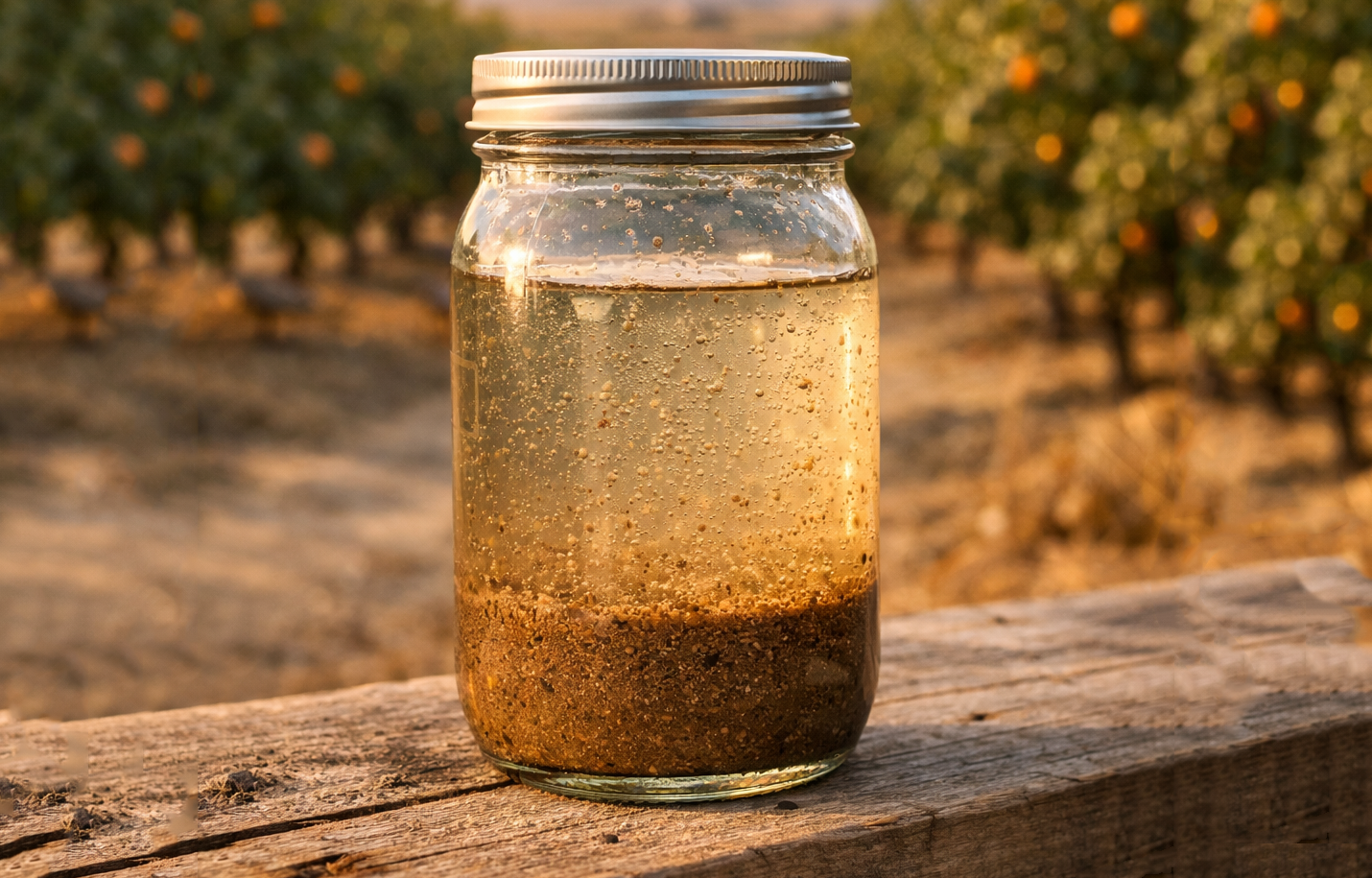
Fine sand is not just an aesthetic issue; it is a highly destructive mechanical abrasive.
- Impeller Erosion: Submersible pump impellers spin at high speeds (often 3,450 RPM). When fine sand enters the pump, it acts like liquid sandpaper. It grinds away the plastic or brass impellers, widening tolerances, reducing water pressure, and drastically shortening your pump’s lifespan. Read about lifespan factors in How Long Well Pumps Last.
- Clogged Drip Emitters: For citrus, almond, and pistachio growers, fine sand that escapes filtration settles in drip irrigation lines. This leads to clogged emitters and “blind spots” in your orchards where trees slowly dehydrate.
- Ruined Home Appliances: Sand cut-throughs can ruin faucet washers, clog washing machine inlet valves, and accumulate in the bottom of your home’s hot water heater, reducing its heating efficiency.
The DIY Well “Bucket Test”
How do you know if your well is producing a dangerous amount of sand? Perform this simple, regular “boots-on-the-ground” test:
- Locate the Sampling Tap: Find a hose bib directly at the well-head, before the water enters the pressure tank or any filtration systems.
- Fill a 5-Gallon Bucket: Turn on the tap fully and fill a clean 5-gallon plastic bucket with well water.
- Let It Settle: Place the bucket on a flat surface and let it sit undisturbed for 10 to 15 minutes.
- Inspect the Bottom: Slowly tip the bucket to pour out the water, keeping the very bottom intact. If you see more than a “pinch” (roughly 1/8th of a teaspoon) of fine sand, your well is drawing too much sediment.
Modern Solutions for Sandy Wells
If your bucket test reveals excessive sediment, you must take active steps to protect your equipment.
Centrifugal Sand Separators
These units spin incoming water, forcing heavy sand particles to separate and drop into a cleanable flush chamber. They are highly effective at cleaning irrigation water before it reaches drip lines.
Variable Frequency Drives (VFDs)
Standard well pumps operate at 100% capacity the moment they start up. This sudden surge of suction “shocks” the aquifer, pulling a heavy slug of sand through the screen. A VFD ramps the motor up slowly, keeping water velocity low and stable, which minimizes sand drawing. Read about VFD benefits in Citrus and Nut Grove Well Solutions.
Down-Hole Camera Diagnostic
If a well suddenly begins producing massive volumes of sand, the well screen or casing may have collapsed or rusted through. A professional C-57 contractor can lower a specialized camera down-hole to inspect the well casing joints and identify failure points.
Protect Your Well from Sand Damage
At Ingram Pump & Equipment, we’ve spent over 75 years studying the geology and water tables of Kings and Tulare Counties. We design custom filtration, sand separation, and VFD systems tailored to your property’s specific soil conditions.
- Check Our Commercial & Ag Well Services
- Schedule a Well Sand Diagnostic & Camera Inspection
- Call the Ingram Team at (559) 734-3362 to protect your system
Frequently Asked Questions
Why do wells in the Central Valley produce so much sand?
The San Joaquin Valley floor is made of thousands of feet of loose, alluvial sediment (sand, clay, and silt) washed down from the Sierra Nevada mountains, rather than solid bedrock. Wells must draw water directly from these loose sandy layers.
What is the 'Bucket Test' for well sand?
It is a simple DIY test: draw 5 gallons of water directly from your well-head tap before any filters. Let it settle for 10 minutes. If you see more than a tiny pinch of fine sand at the bottom, your well casing or screen may be drawing excessive sediment.
How does sand affect orchard drip irrigation systems?
Fine silt and sand bypass standard farm filters and settle inside drip emitters. This causes partial or complete clogging, leading to uneven orchard watering and hidden crop dry spots that damage tree health.
Related Articles
Citrus & Nut Grove Well Pump Solutions: Managing Sand & Mineral Scale
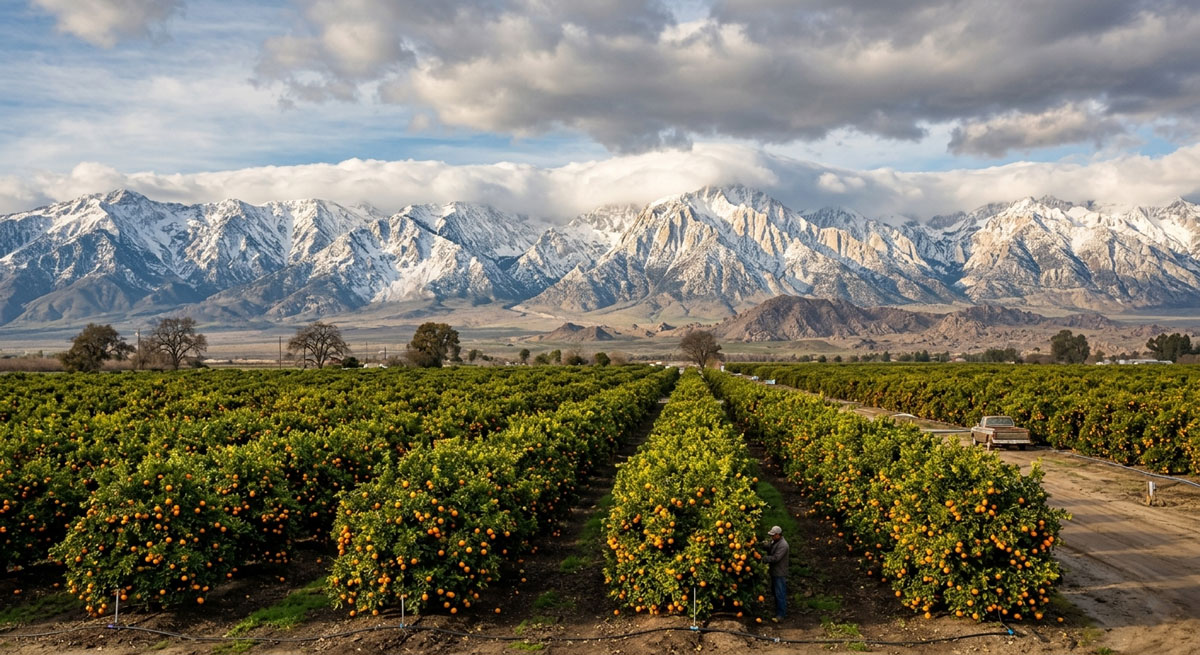
A comprehensive guide for Central Valley farmers in Tulare & Kings County on managing sandy aquifers, calcium scale, and leveraging VFDs to protect citrus and nut grove irrigation systems.
Well and Pump Sizing for Central Valley Citrus Orchards
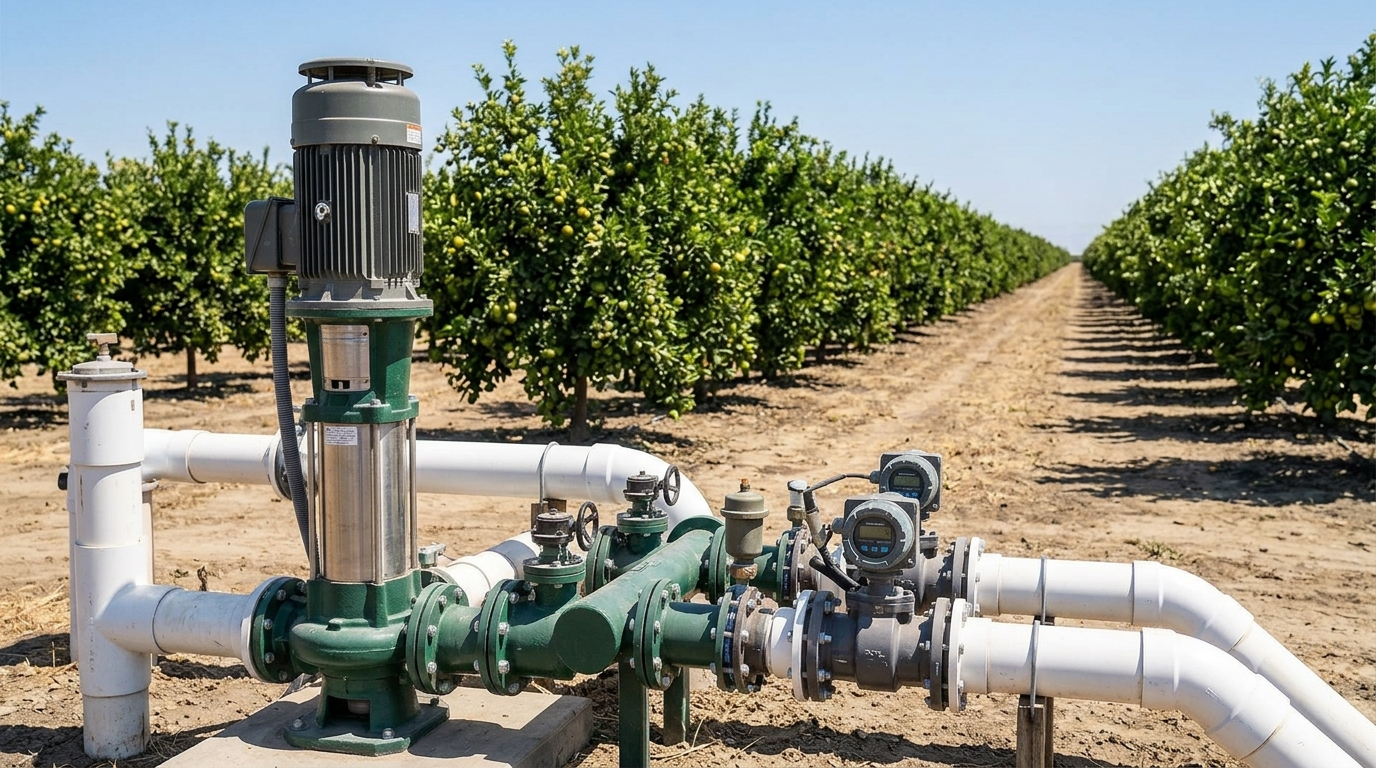
A technical guide for Central Valley citrus growers on calculating orchard water demand, sizing deep-well submersible pumps, and matching horsepower to water tables.
Well Pressure Tank Sizing for Small Farms: Why Most Tanks Are Too Small
Running a small farm in Kings or Tulare County? Discover why undersized pressure tanks cause premature well pump failures, and learn how to size your water system correctly.