Why Is My Well Pump Not Starting? A Homeowner's Checklist
There is nothing more stressful than opening the tap on your San Joaquin Valley acreage and hearing absolutely nothing. Before you assume the worst and prepare for an expensive pump replacement, there are a few simple things you can troubleshoot yourself to save time and potentially avoid a service call.
1. Check Your Breakers and Power Source
It sounds basic, but a tripped circuit breaker is the most common cause of a sudden system stop.
- Main Panel: Locate your home’s main electrical panel and look for the double-pole breaker labeled “Well Pump.” If it has tripped to the center position, flip it fully to “Off” and then back to “On.”
- Subpanel / Well House: Many rural properties near Visalia and Tulare have a secondary disconnect box or breaker right next to the pressure tank. Check that switch as well.
- Blown Fuses: If your system uses an older cartridge fuse disconnect box, check if a fuse has blown.
2. Inspect the Pressure Gauge
The pressure gauge is the speedometer of your water system.
- Reads Zero: If the gauge reads 0 PSI, your pump is indeed not running, or there is an electrical issue preventing it from turning on.
- Reads Normal (30–50 or 40–60 PSI): If the gauge reads healthy pressure but no water enters your home, you likely have a plumbing blockage, a frozen pipe (rare in the valley except on winter nights in Three Rivers), or a closed main valve between the tank and your taps.
3. Check the Pressure Switch (The System “Brain”)
The pressure switch tells the pump when to turn on (cut-in pressure) and when to turn off (cut-out pressure).
- Debris & Insects: Ants and dirt daubers love the warm electrical contacts inside pressure switches. Turn off the power breaker, remove the plastic cover, and inspect the electrical contact points. If they are covered in bugs or heavily pitted, they won’t make a solid electrical connection.
- Sediment Clogs: Central Valley wells are prone to fine sand and mineral buildup. Over time, sediment can clog the small nipple or copper tube leading to the pressure switch. This prevents the switch from “seeing” the pressure drop, so it never tells the pump to turn on. Learn how to address sediment issues in our guide on sandy and silty aquifers.
4. Listen for Short Cycling
If you hear your system clicking on and off rapidly when water is running, that is “short cycling,” which is a major red flag that you have a waterlogged pressure tank.
A waterlogged tank has lost its critical air cushion. Running a pump under short-cycling conditions will destroy the motor windings in a matter of weeks. Read our extensive guide on how to spot and fix short cycling before it leads to motor burnout.
5. Check the Snifter Valve (For Older Systems)
If your system relies on an older air-over-water galvanized tank setup (without a rubber bladder), a faulty snifter valve or air volume control could mean your tank is completely waterlogged.
When to Call the Well Pump Specialists
If you’ve checked your breakers, verified your switch is clean, and still don’t have water, the issue could be a burned-out control box, a damaged wire underground, or a failing submersible pump motor.
At Ingram Pump & Equipment, we’ve been keeping the water flowing for Central Valley families since 1947. We offer 24/7 emergency repair services to get your residential water system back online fast.
- Check Our Annual Maintenance Benefits
- Request an Emergency Quote
- Call the Ingram Family Experts at (559) 734-3362
Frequently Asked Questions
What is the most common reason a well pump won't start?
A tripped circuit breaker or a blown fuse is the most common and easily fixed cause of sudden well pump failure. Always check your main electrical panel and the dedicated pump breaker box first.
How do I know if my pressure switch is bad?
If the contacts are heavily burned, pitted, or if tapping the side of the switch restores power momentarily, the switch is likely failing. Additionally, if sediment blocks the small tube feeding the switch, it cannot detect the pressure drop and won't trigger the pump.
My pump clicks repeatedly but doesn't start. What does that mean?
Rapid clicking is called 'short cycling' and usually points to a completely waterlogged pressure tank. This occurs when the tank loses its air cushion, forcing the pressure switch to activate and deactivate rapidly.
Related Articles
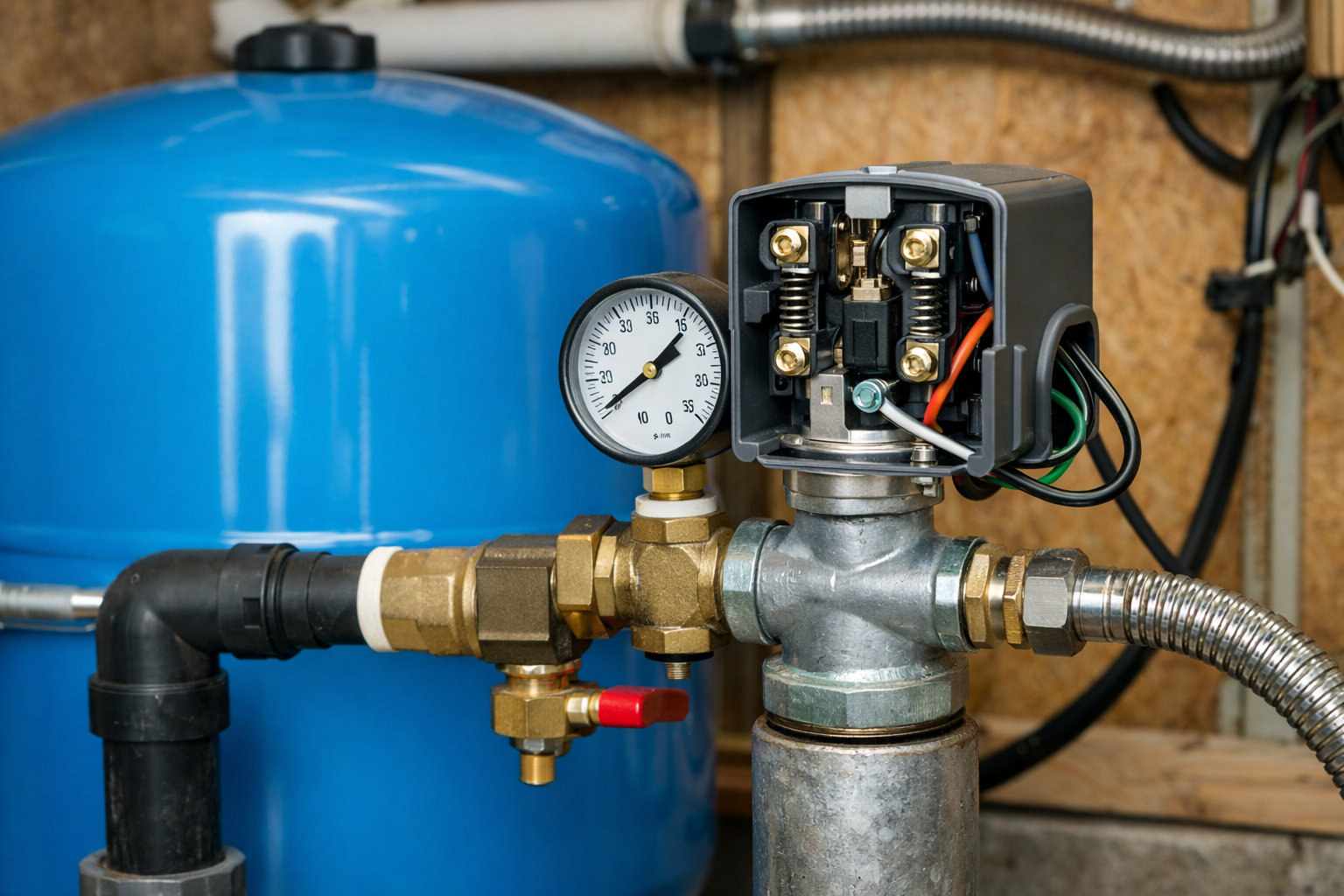
DIY Guide: Inspecting and Replacing Your Well’s Pressure Switch and Gauge
Learn how to safely inspect, clean, and replace your water well pressure switch and gauge. Follow our step-by-step DIY guide for Central Valley homeowners.
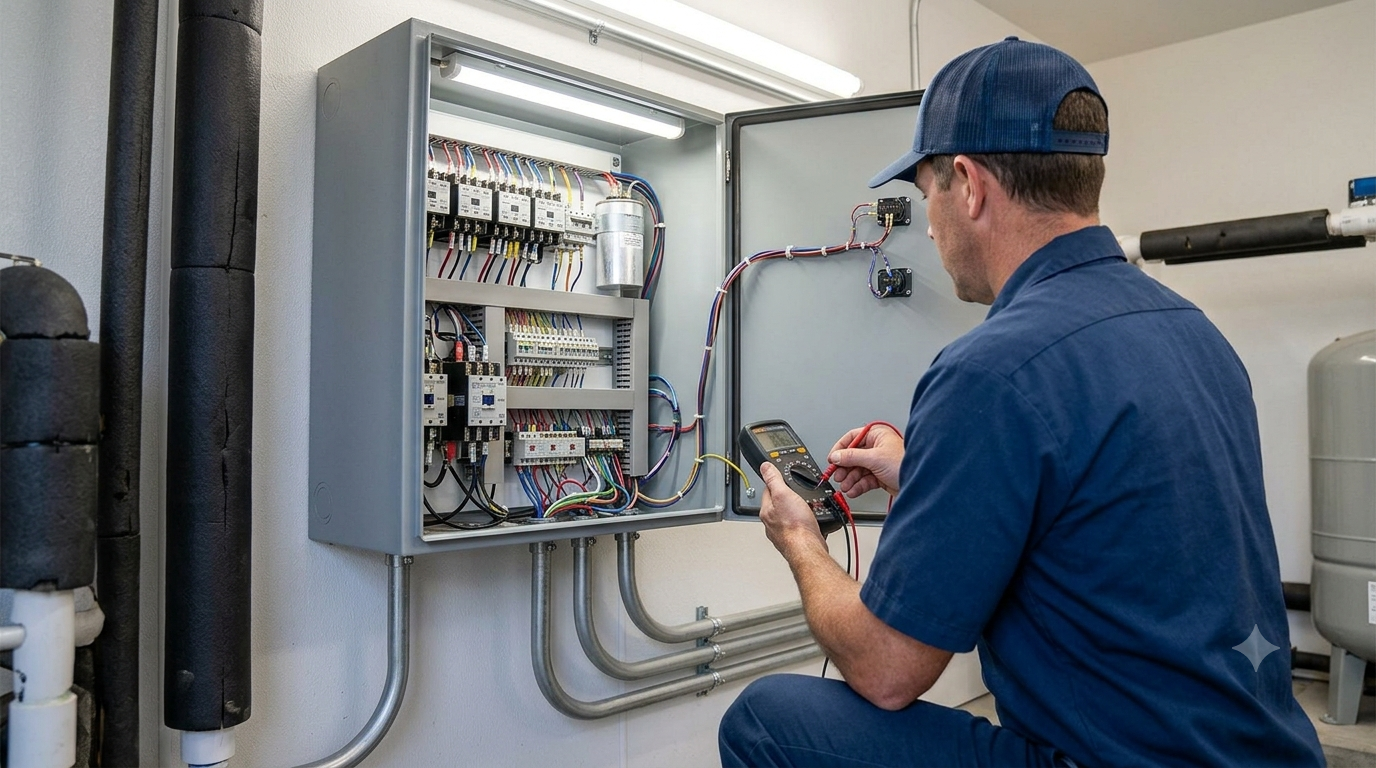
Inspecting Your Well’s Electrical System: Breakers, Wiring, and Control Boxes
A homeowner’s guide to well pump electrical systems. Learn how to inspect breakers, wiring, control boxes, and pressure switches safely to prevent system failure.
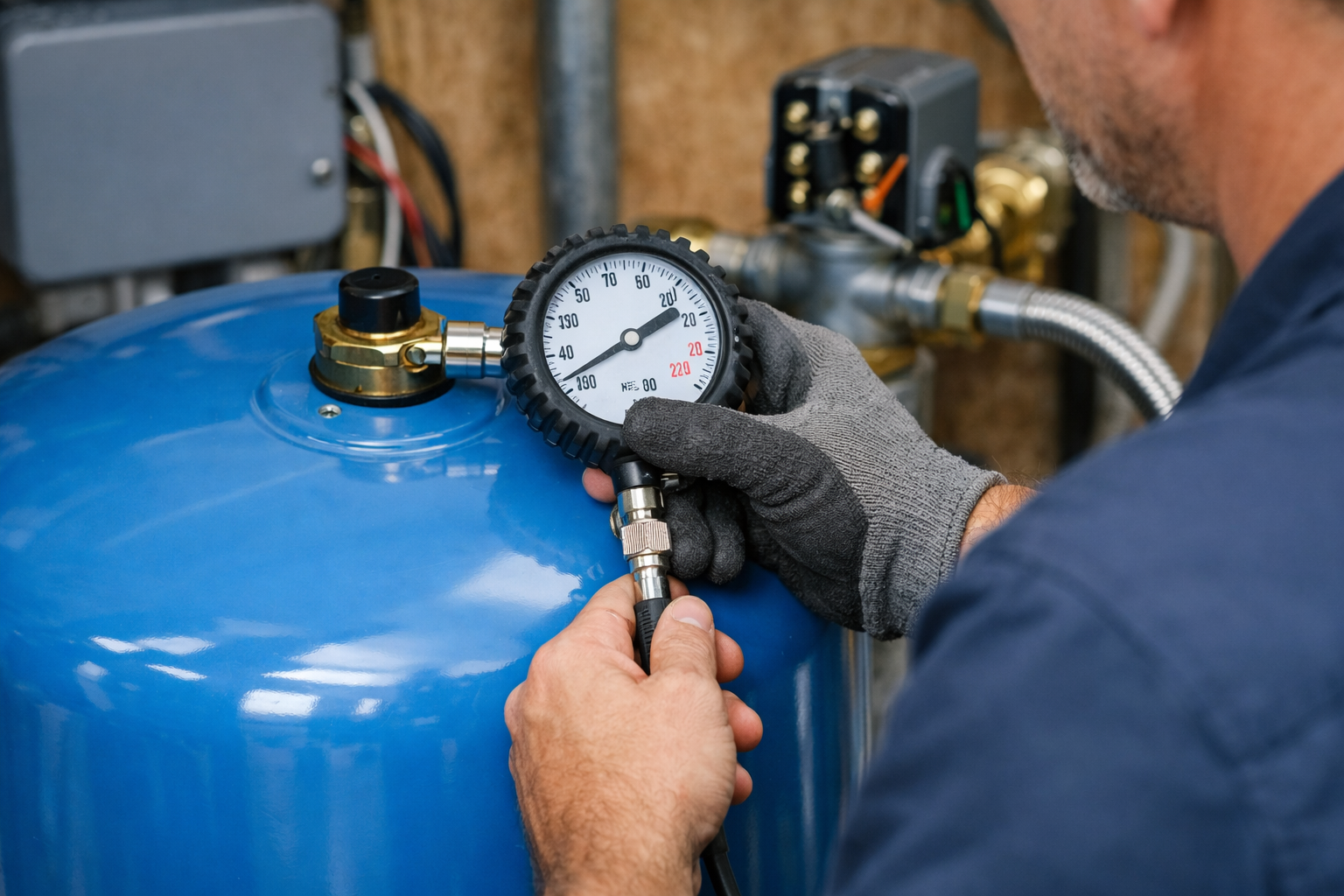
DIY Well Pressure Tank Care: Checking Air Charge and Precharge Pressure
A step-by-step DIY guide on checking, testing, and recharging your water well pressure tank air precharge pressure to extend your pump lifespan.