
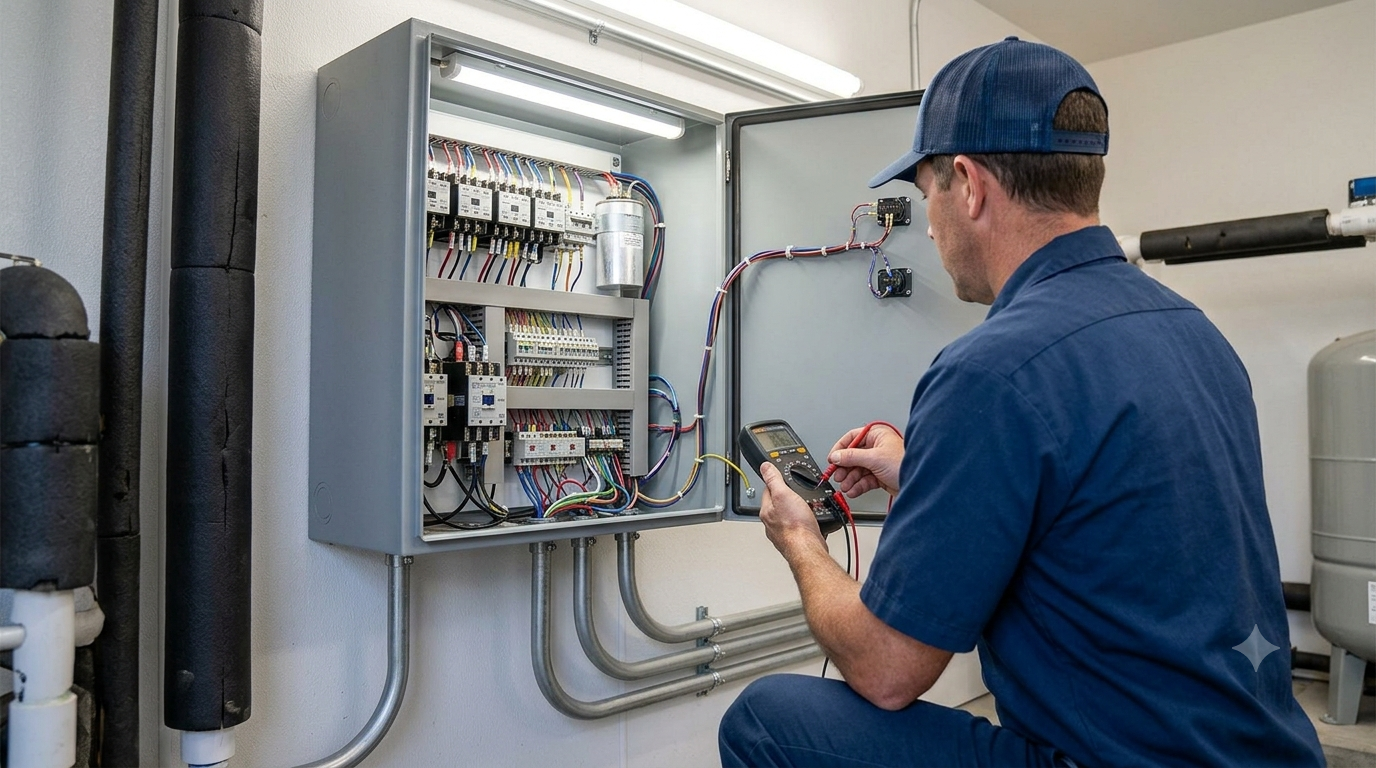
Inspecting Your Well’s Electrical System: Breakers, Wiring, and Control Boxes
Your private water well system is more than just a plumbing assembly; it is a high-voltage electrical appliance. From the double-pole breakers in your home’s electrical panel to the start capacitors in your control box, your system relies on clean, stable power to keep the water flowing.
Because electrical failures represent over 70% of all sudden well pump outages, learning how to safely inspect and maintain your well’s electrical components is one of the most powerful ways to prevent sudden emergencies.
Warning: Electrical Safety Protocol
Before performing any electrical checks beyond simple visual inspections, you must shut off the main power supply at your main electrical breaker panel. Always verify the circuits are fully deactivated using a non-contact voltage tester before touching terminal blocks or wires. If you are ever uncomfortable, hire a licensed electrician or pump specialist.
1. The Circuit Breaker and Fuse Box
Your well system draws a dedicated 230V feed through a double-pole circuit breaker, typically rated at 20 or 30 Amps.
- Loose Connections: Over time, thermal expansion (heating and cooling) can cause wire screws on the breaker terminal to loosen. Loose connections create electrical resistance, generating heat that can melt wire insulation and trip the breaker.
- Corrosion check: Central Valley moisture and dust can lead to corrosion on breaker contacts, especially in outdoor well houses. Ensure terminals are clean and shiny.
- Trip Troubleshooting: If your breaker trips immediately upon flipping it on, you have a direct short-to-ground in either your control box, the buried cable, or the pump motor. Do not keep resetting a tripping breaker, as this can destroy your equipment.
2. The Pump Control Box (For 3-Wire Systems)
If your submersible pump uses a “3-wire” motor, you will have an above-ground control box mounted on the wall near your pressure tank. This box contains the “starting brains” of the motor.
- Start & Run Capacitors: Capacitors store electricity like a battery and discharge it in a massive surge to kick-start the pump motor. Look for signs of thermal swelling (tops bulging out) or oil leaks. A swollen capacitor is dead or dying and must be replaced.
- Relay Contacts: The starting relay directs electricity to the start capacitor. Inspect the contacts for pitting, black soot, or insect nests. Ants love the warmth of control boxes and will frequently crawl between points, shorting out the system. Learn more in our No-Water Troubleshooting Checklist.
3. The Pressure Switch Wiring
The pressure switch sits inline and carries the full electrical current to your pump.
- Wire Insulation Wear: Check that the insulated wire jackets leading into the pressure switch are not cracked, frayed, or chewed by rodents.
- Loose Terminals: Looseness in the terminal screws where the wires attach to the switch contacts is a major cause of burned switches. Tighten these contacts annually (with power fully off!). Read how to replace a faulty switch in DIY Pressure Switch Replacement.
4. Grounding and Surge Protection
A well pump motor is basically a lightning rod buried deep in the ground, making it highly susceptible to power surges.
- Verify the Ground: Ensure a thick green or bare copper grounding wire is securely bonded to both your electrical panel ground bar and your steel well casing.
- Install a Surge Arrestor: We highly recommend mounting a dedicated pump surge protector (surge arrestor) inside your control box. This absorbs high-voltage lightning strikes and utility line spikes, protecting your expensive submersible motor from frying.
5. Wire Sizing and NEMA Enclosures
- NEMA Weatherproof Enclosures: In the Central Valley, summer heat and blowing dust are extreme. Ensure your outdoor electrical panels use NEMA 3R weatherproof enclosures and that the rubber gaskets are intact. Learn more about summer stress in Why Well Pumps Fail in the Summer.
- Under-Sized Wiring: If your pump is located far from your electrical panel (e.g., 500 feet away), the wires must be sized thicker (lower gauge) to prevent “voltage drop.” Running a pump on under-voltage causes it to draw excess amperage, running hot and leading to premature burnout.
Secure Your Electrical Well Connections
At Ingram Pump & Equipment, we don’t just fix plumbing; we are fully equipped to troubleshoot complex electrical well problems, VFD motor control panels, and automated agricultural irrigation boards.
- Check Our Troubleshooting and Repair Services
- Schedule an Electrical Well Audit
- Call the Ingram Team at (559) 734-3362 to secure your system’s electrical health
Frequently Asked Questions
Why does my well pump circuit breaker keep tripping?
A breaker trips because of an overcurrent (amperage spike). This is usually caused by a failing start capacitor in your control box, loose wire connections, or a submerged motor that is mechanically binding or shorting out.
What does the pump control box do?
For three-wire submersible pumps, the above-ground control box contains the start and run capacitors and starting relays. It provides the heavy electrical boost needed to start the underwater motor.
How often should I tighten electrical connections in my well house?
We recommend a quick, safe visual inspection of your electrical panel and tightening of wire terminal screws once a year, preferably in the autumn before winter dampness sets in.
Related Articles
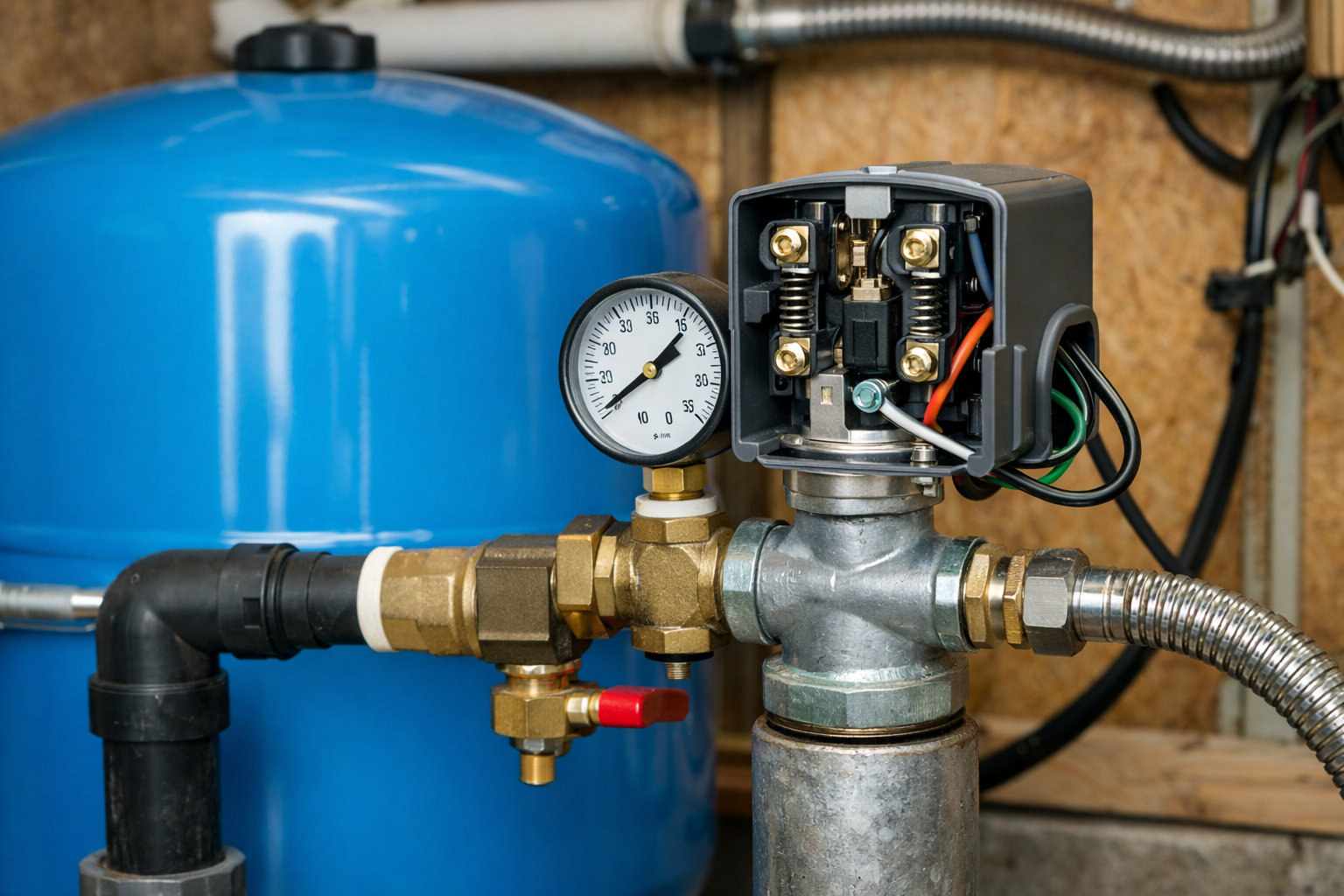
DIY Guide: Inspecting and Replacing Your Well’s Pressure Switch and Gauge
Learn how to safely inspect, clean, and replace your water well pressure switch and gauge. Follow our step-by-step DIY guide for Central Valley homeowners.

Why Is My Well Pump Not Starting? A Homeowner's Checklist
No water on your Central Valley property? Follow this step-by-step homeowner's well pump troubleshooting checklist to resolve common power and switch issues.
Why Is My Well Pump Short Cycling? (And How to Prevent Motor Burnout)
Does your well pump turn on and off rapidly? Discover what short cycling is, why a waterlogged pressure tank is the main cause, and how to fix it before your pump motor burns out.